

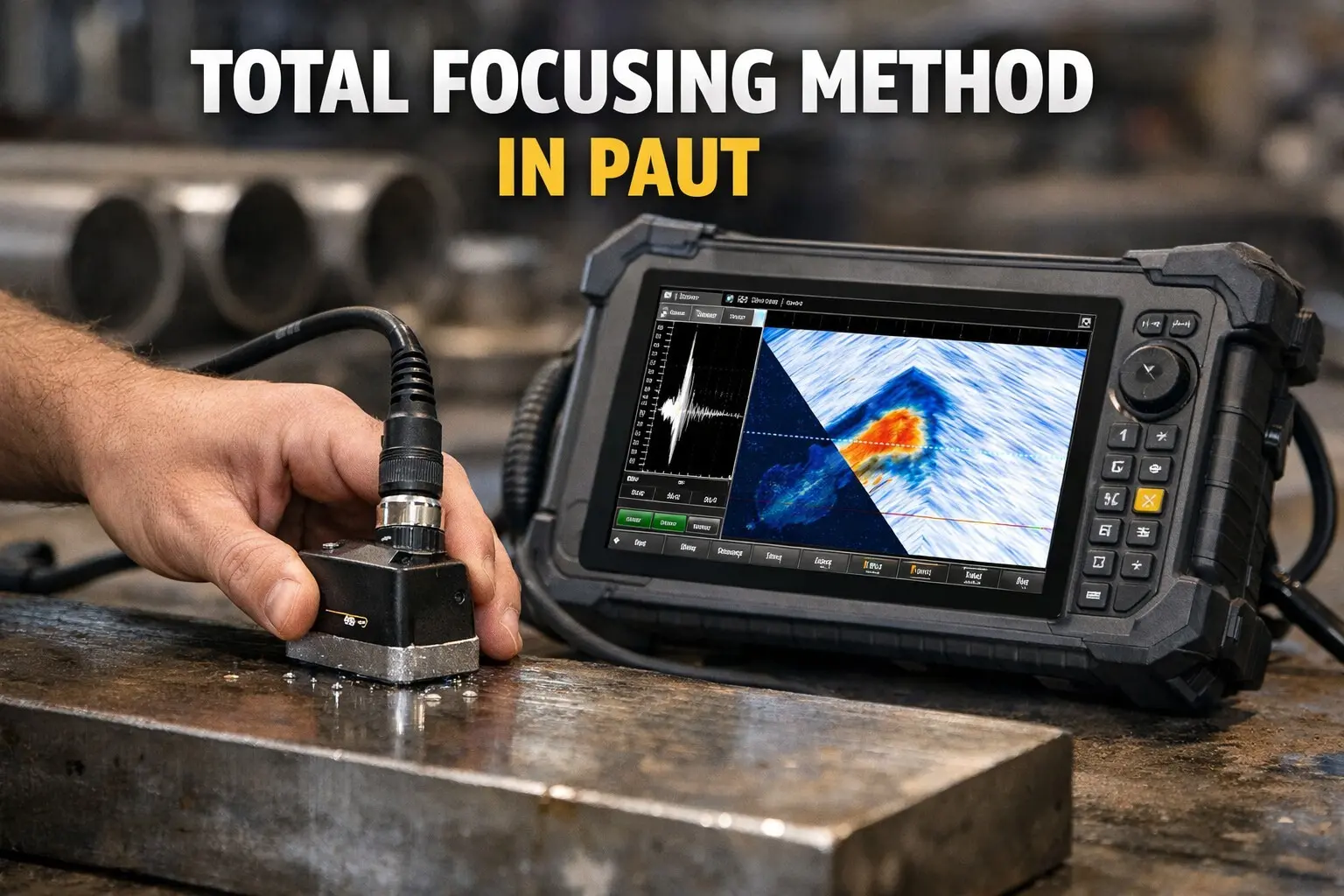
PAUT Total Focusing Method (TFM): The Advanced NDT Technique Reshaping Oil & Gas, Aerospace, and Construction Inspections
If you're still qualifying welds and inspecting critical assets with conventional phased array or traditional UT alone, you're leaving resolution — and risk — on the table. Phased Array Ultrasonic Testing (PAUT) combined with the Total Focusing Method (TFM) is fast becoming the benchmark technique for high-consequence inspections across oil & gas, aerospace, and construction. Here's what every serious NDT professional needs to know about it.
What Is the Total Focusing Method (TFM)?
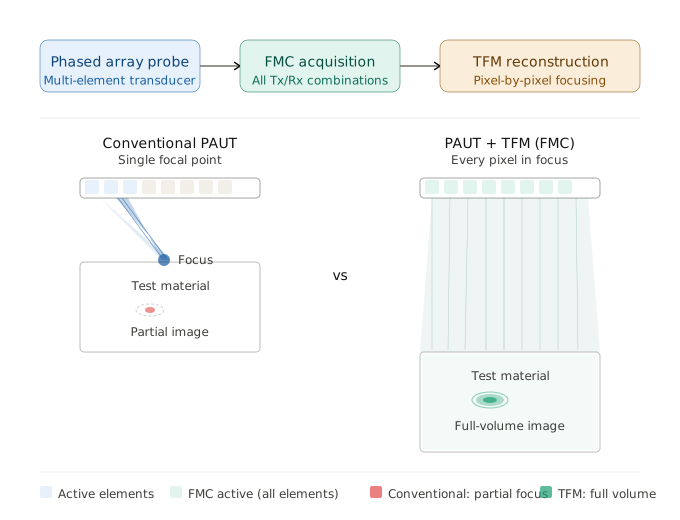
TFM is an advanced post-processing algorithm that works in tandem with Full Matrix Capture (FMC) data acquisition. In a conventional PAUT setup, the phased array probe fires a pre-defined, focused beam at set angles. TFM changes the paradigm entirely.
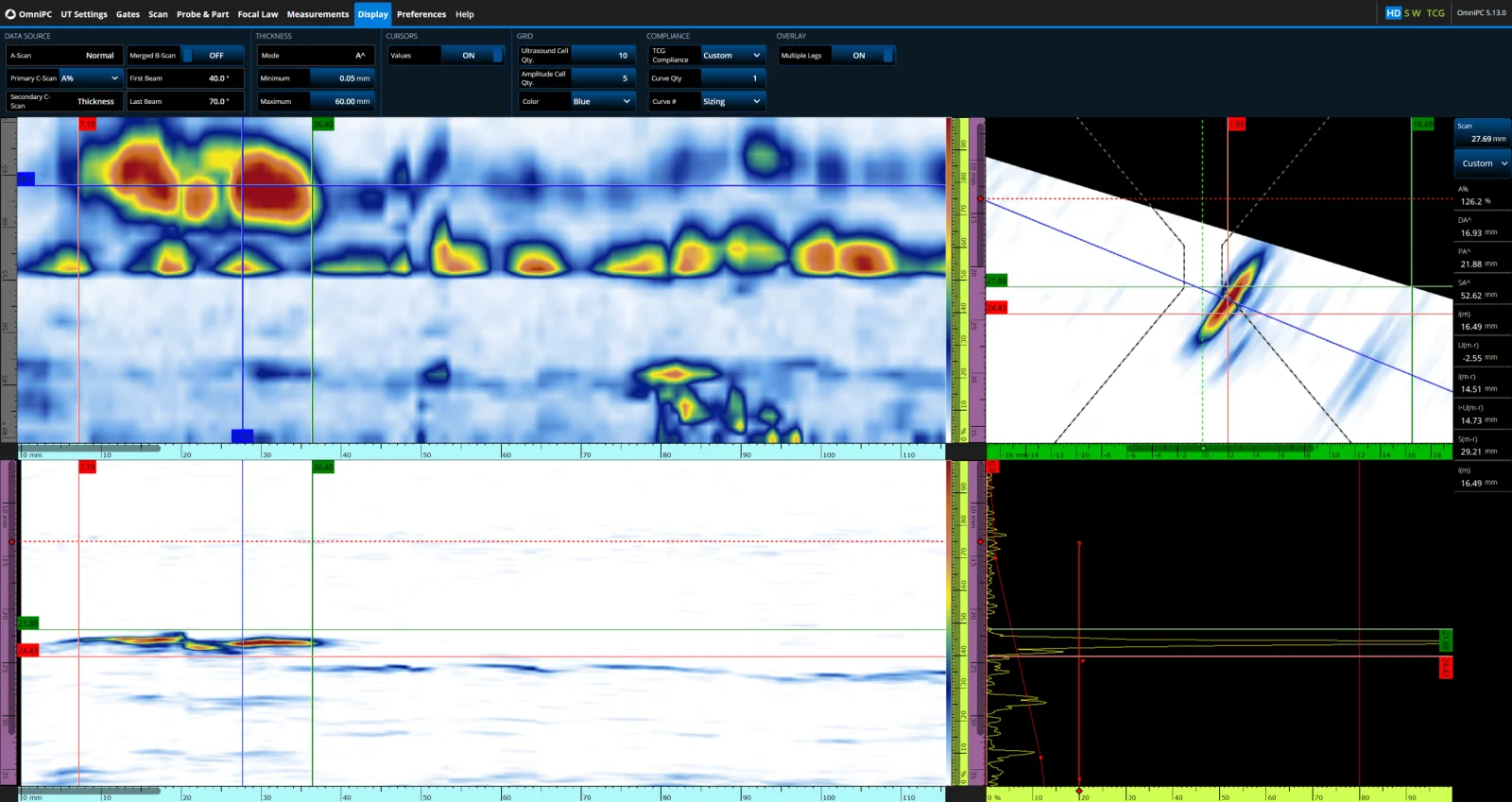
With FMC, every element in the array fires independently, and every element receives the resulting echoes — capturing all possible transmit/receive combinations. TFM then mathematically reconstructs this raw data by synthetically focusing the ultrasonic beam at every single pixel in the inspection zone, rather than just at a pre-selected focal point. The result is a fully focused, high-resolution image of the entire test volume — simultaneously.
Think of it this way: conventional PAUT is like a flashlight you point at one spot. TFM is like flooding the entire room with uniform, perfect light.
TFM vs. Conventional PAUT: Key Differences
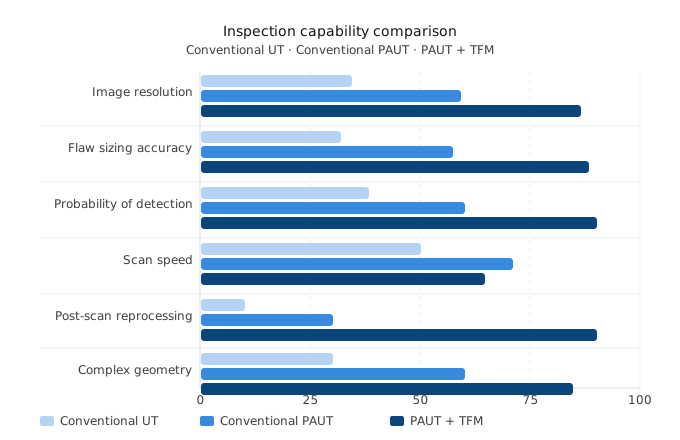
| Feature | Conventional PAUT | PAUT + TFM (FMC) |
|---|---|---|
| Beam focusing | Pre-defined focal law | Post-processed, every pixel |
| Image resolution | Good | Superior |
| Flaw characterization | Standard | Advanced sizing & profiling |
| Data flexibility | Fixed at scan time | Re-processable post-scan |
| Setup complexity | Moderate | Higher — requires advanced training |
| Standards compliance | ASME V, ISO 13588 | ASME V Article 4/14, ASME Code Case 2897 |
Why TFM Matters for Oil & Gas Inspections
The oil & gas sector demands near-zero tolerance for missed defects. Pressure vessels, pipelines, nozzle welds, and offshore structural joints all present complex geometries and demanding material conditions. TFM excels here for several reasons:
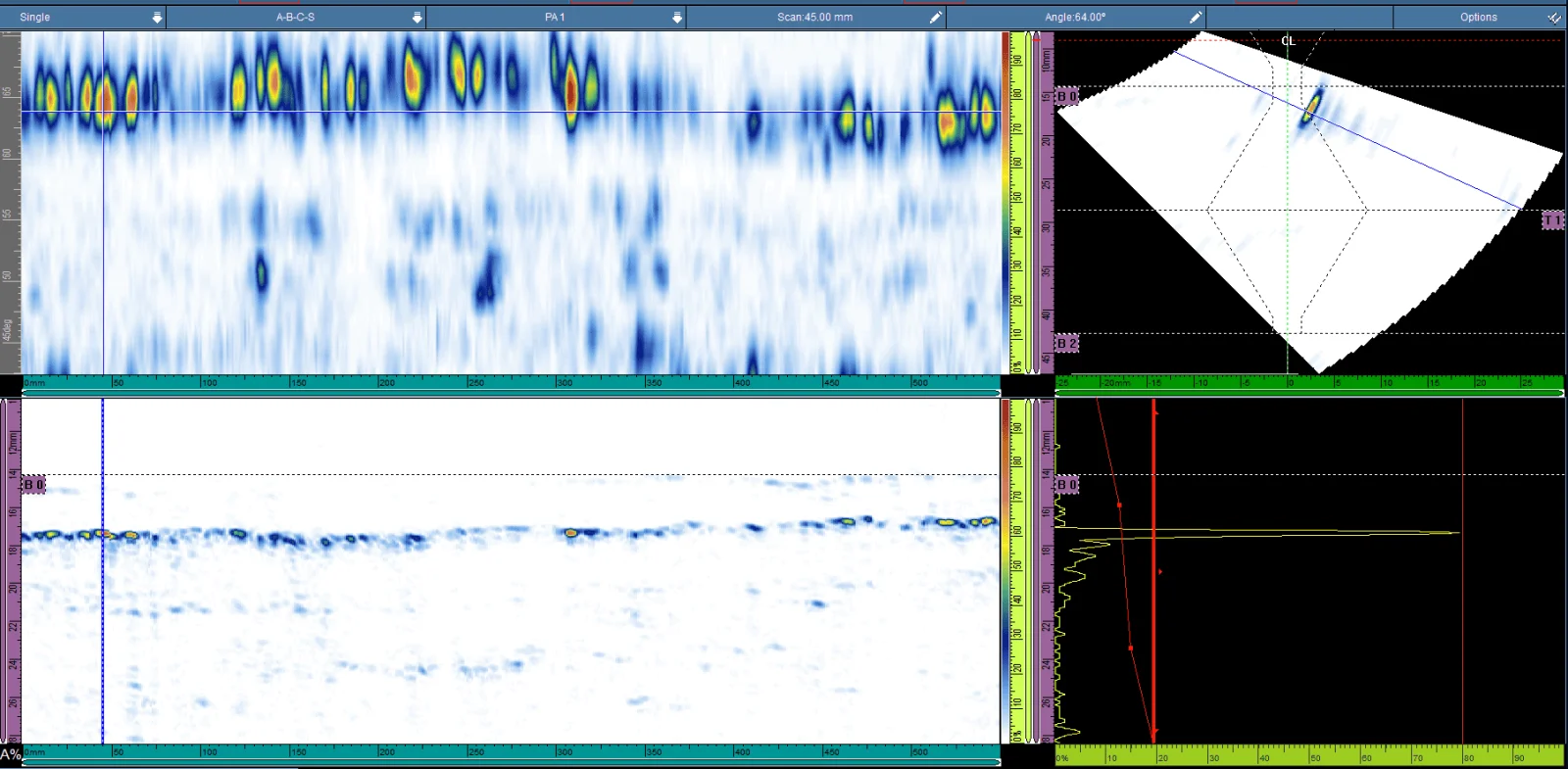
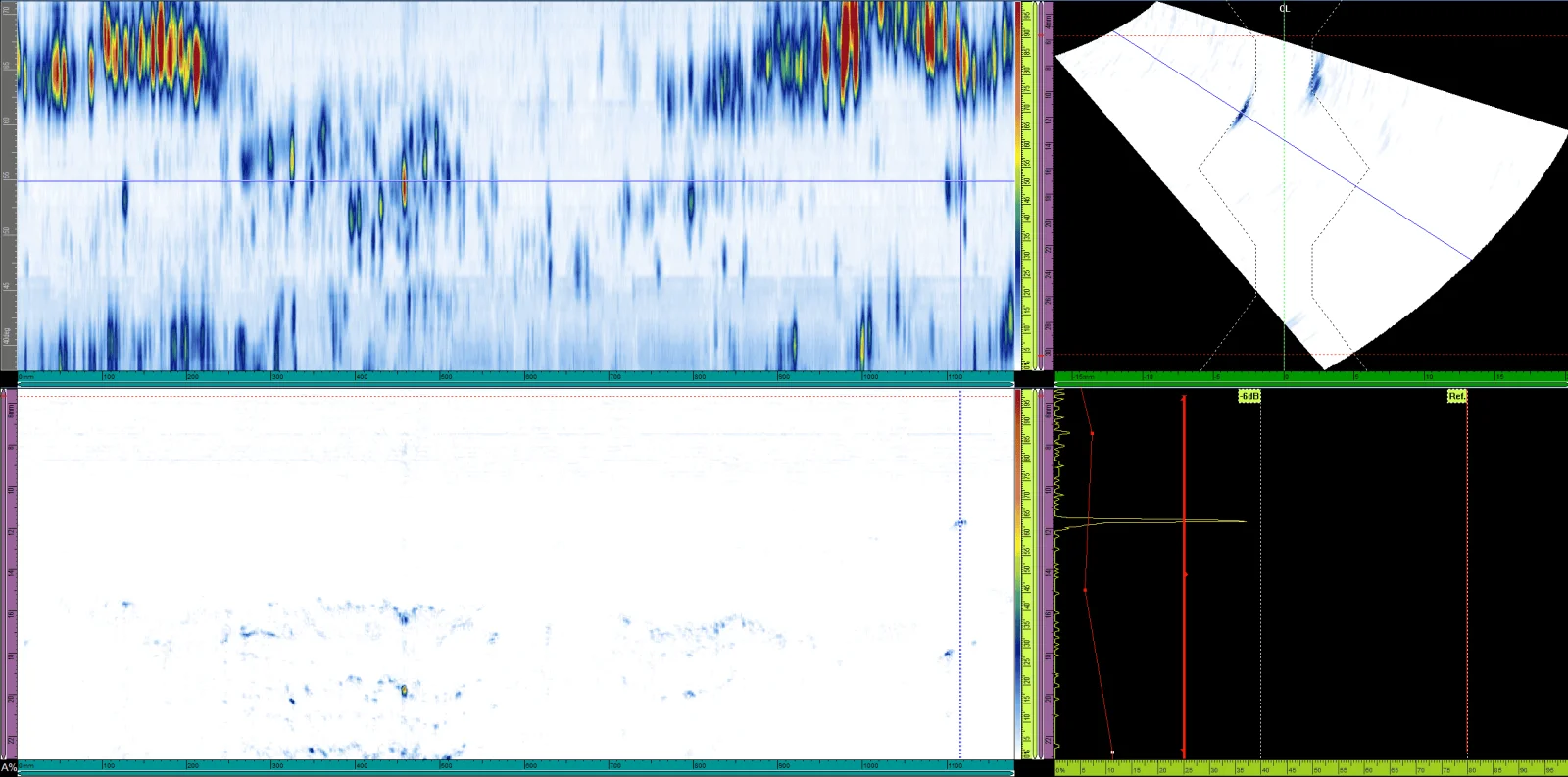
Higher sensitivity for planar flaws. Lack of fusion and stress corrosion cracking — the defect types most likely to cause catastrophic failure — are planar in nature. TFM's uniform focusing dramatically improves the probability of detection (POD) for these flaws compared to conventional beam-steered PAUT.
Superior sizing accuracy. When you need to apply fitness-for-service (FFS) assessments or remaining life calculations, the accuracy of your flaw dimensions matters enormously. TFM's full-volume focusing produces sharper defect tip diffraction signals, leading to more reliable through-wall sizing.
Post-scan reprocessing. Raw FMC data can be reprocessed after the scan using different wave modes, angles, or algorithms — without returning to the asset. This is a significant advantage for offshore or remote locations where re-inspection is costly.
Multi-mode imaging. A single FMC acquisition can generate multiple TFM images using different wave mode paths (e.g., L-L, L-T, T-T), enabling inspectors to interrogate the same weld volume from multiple angles and significantly improving characterization of complex indications.
TFM in Aerospace NDT
In aerospace, the structural integrity of components like turbine blades, bonded composite joints, and landing gear assemblies depends on detecting small, deeply embedded flaws that conventional methods may miss. TFM's high-resolution imaging has become a critical tool in this environment.
For composite inspection, TFM algorithms adapted for anisotropic materials help inspectors identify delaminations, porosity, and disbonds with a level of clarity that conventional PAUT cannot consistently achieve. As aerospace OEMs push toward lighter structures and tighter tolerances, TFM is no longer a "nice to have" — it is increasingly specified in inspection procedures.
TFM in Construction and Structural Weld Inspection
Structural welds in bridges, high-rise frameworks, and pressure-containing pipework present challenges of geometry and access. TFM's ability to produce high-resolution cross-sectional weld images from a single-side scan makes it ideal for situations where access is restricted or backwall geometry is complex.
Combined with TOFD (Time of Flight Diffraction) for embedded flaw sizing, TFM provides a comprehensive inspection solution that satisfies modern construction codes and owner-inspector requirements.
Standards and Code Compliance: What You Need to Know
Regulatory acceptance of TFM is maturing rapidly. Key codes and standards NDT professionals should reference include:
- ASME Section V, Article 4 — addresses phased array UT for weld examinations; TFM is increasingly accommodated within this framework
- ASME Code Case 2897 — specifically addresses the use of FMC/TFM for weld examination as an alternative to conventional PAUT
- ISO 13588 — covers automated phased array UT for weld inspection, with provisions relevant to TFM-based systems
- ASME Section V, Article 14 — provides the framework for qualifying new and alternative UT techniques
Operators and NDT Level IIIs developing procedures for TFM must pay close attention to amplitude fidelity, sensitivity correction, dead zone characterization, and calibration block requirements — all of which differ from conventional PAUT procedure development.
Operator Qualification: Raising the Bar
TFM is not a plug-and-play upgrade. The same high-resolution imaging that makes TFM so powerful also generates more complex data that demands a higher level of interpreter competency. Key qualification considerations include:
- UT Level 2 Welds certification (PCN or SNT) is typically the minimum prerequisite
- PAUT experience is strongly recommended before attempting TFM training
- Formal TFM training programs, aligned with ASME Section V and SNT-TC-1A / PCN, are now offered by accredited training bodies worldwide
- Inspectors must demonstrate proficiency in FMC data acquisition parameters, wave mode selection, sensitivity correction, and indication characterization
As an NDT professional, investing in TFM qualification now positions you ahead of the curve as client specifications and regulatory frameworks increasingly mandate its use.
Choosing the Right Equipment for TFM Inspections
Not all PAUT instruments support FMC/TFM. When specifying equipment for TFM applications, consider:
- Channel count: 32-element minimum; 64-channel instruments provide greater flexibility for larger apertures and higher-frequency probes
- FMC acquisition rate: Higher frame rates (e.g., 100+ Hz) are essential for encoded scanning on welds
- TFM point density: Higher resolution (up to 1M+ points per frame on advanced platforms) provides better imaging of complex defects
- Multi-mode TFM capability: Support for simultaneous L-L, L-T, and T-T imaging in a single acquisition
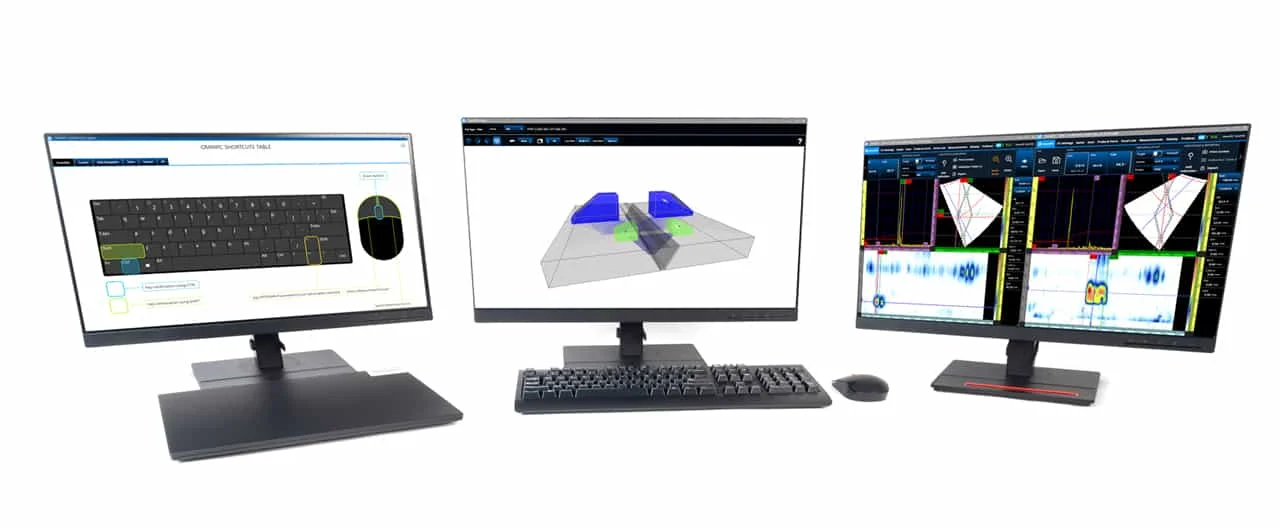
- Software and post-processing: Look for robust analysis software that supports amplitude calibration, sensitivity correction, and multi-mode TFM reconstruction
The Bottom Line for NDT Professionals
PAUT with TFM represents the most significant advance in volumetric ultrasonic inspection in a generation. For NDT professionals working in oil & gas, aerospace, and construction, it is no longer a niche capability — it is becoming the expected standard for high-consequence inspections.
The combination of superior flaw detection, advanced sizing capability, multi-mode flexibility, and post-scan reprocessing makes FMC/TFM a powerful tool in the hands of a qualified inspector. The investment in training, certification, and equipment is substantial — but so is the advantage it provides in a competitive inspection marketplace.
About NDT Inspect | ndtinspect.com NDT Inspect is a resource for NDT professionals across oil & gas, aerospace, and construction — covering advanced inspection techniques, equipment, training, and industry standards.













0 comments
Sign in to join the discussion.