
 Join free
 Register your company
 Sign in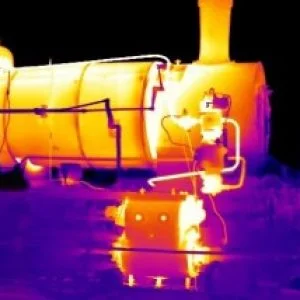
Welcome to NDT Inspect's thermography group, a place for professionals to connect and discuss the latest techniques and technologies in thermography.
Thermography is a non-destructive testing method that uses thermal imaging cameras to detect and measure temperature differences on the surface of components. It is often used to detect hot spots or areas of abnormal heat that may indicate a fault or malfunction within the component. Our member group offers a platform for sharing knowledge and best practices on thermography and its applications in various industries. Join our community of experts from around the world and be a part of the conversation on advancing the practice of thermography.
Updates
-
 manaswi replied to a discussion1 year ago
The working of thermal imaging cameras includes the following principles and features:
Infrared Detection:Objects emit Infrared Radiation proportional to their temperature. Thermal imaging infrared cameras capture this invisible radiation within certain wavelength ranges, usually around 8–14 µm.
Temperature Mapping:Camera sensors (uncooled microbolometers or cooled photon detectors) measure infrared radiation. These readings are processed into images, showcasing hot and cold spots as colour-coded visuals.
Accuracy in Thermal Imaging Cameras is determined by factors like:
- Emissivity: The efficiency of the surface in emitting thermal energy that varies across materials.
- Detector Sensitivity: Determines the camera’s ability to detect temperature differences.
- Thermal Imaging Camera Range: The measurable temperature span is essential for applications in extreme environments.
Thermal imaging cameras offer diverse functions and features. Each type is optimised for distinct use cases, some of which include:
Hand-Held Thermal Imaging Cameras:- Hand-held thermal imaging cameras are lightweight, portable, and ideal for on-site inspections. These devices provide real-time analysis of pipelines, motors, or machinery.
- They feature ergonomic designs for ease of use in extended field operations and offer adjustable settings for emissivity and temperature range to ensure accurate diagnostics.
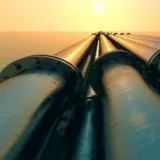
- They can detect overheating in electrical systems, identify insulation faults in mechanical systems and locate leaks in pipelines.
- These systems, integrated with Unmanned Aerial Vehicles (UAVs), extend the thermal imaging camera range to remote and hard-to-reach areas. High-resolution thermal imaging infrared camera data can hence be captured from elevated or dangerous locations.
- These devices are equipped with stabilised mounts for precise imaging in real-time. It also allows for wide-area scanning, crucial for infrastructure like refineries, offshore rigs, and tall structures.
- They can be used to monitor flaring operations in Oil and Gas Fields, conduct aerial surveys for pipeline integrity and identify leaks or hotspots in solar farms and industrial rooftops.
- For applications requiring precision and clarity, the high resolution helps detect minute temperature variations. The cooled sensors provide enhanced sensitivity in high-stakes environments.
- Highly detailed thermal imaging camera images can be obtained as these devices support advanced imaging features, such as image fusion and dynamic range adjustment.
- They aid in inspecting subsea pipelines and infrastructure for corrosion or cracks, monitoring turbines and engines for thermal anomalies and conducting precision diagnostics in laboratories or high-tech manufacturing units.
- Thermal imaging camera installers recommend matching camera specifications with the operational environment to maximise efficiency. Drone-mounted and high-resolution cameras are preferred for leak detection and fault identification.
-
 NDT-Inspect posted an update in the group Thermography3 years ago
Thermography, also known as thermal imaging or infrared imaging, is a technology that uses infrared radiation to detect and measure heat. Thermography is commonly used in a wide range of applications, including building inspection, medical imaging, and environmental monitoring.
In the context of building inspection, thermography is used to detect and diagnose problems in buildings and other structures. By using a thermal imaging camera to create a visual representation of the thermal energy emitted by a structure, it is possible to identify areas where there is excessive heat or where heat is not being distributed evenly. This can indicate the presence of problems such as insulation deficiencies, moisture infiltration, or electrical issues.
In medical imaging, thermography is used to detect and diagnose a wide range of medical conditions. By using a thermal imaging camera to create a visual representation of the body's heat patterns, it is possible to identify abnormalities or changes in temperature that can indicate the presence of diseases or injuries.
In environmental monitoring, thermography is used to detect and measure changes in temperature in the natural environment. This can be used to monitor the health of plants and animals, to detect and monitor fires, and to monitor the effects of climate change on the environment.
-
 doug posted an update in the group Thermography5 years ago
Infrared Thermal Imaging presentation. How it works.