
 Join free
 Register your company
 Sign in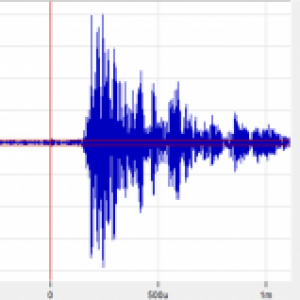
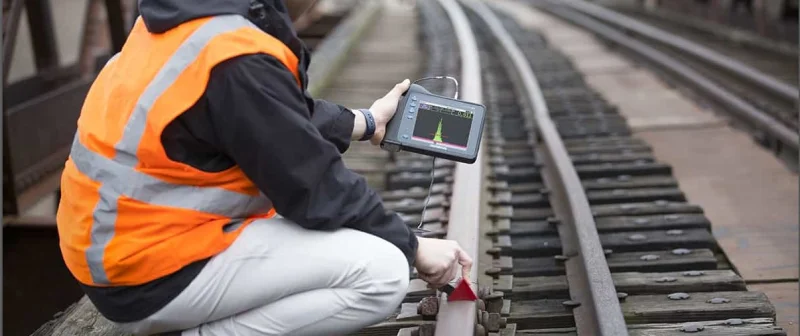
Welcome to NDT Inspect's acoustic emission (AE) group, a place for professionals to connect and discuss the latest techniques and technologies in AE.
Acoustic emission (AE) is a specialized field within non-destructive testing (NDT) and inspection that involves the detection and analysis of acoustic waves or vibrations emitted from materials or structures as a result of internal or external stimuli. It is an important aspect of ensuring the safety and reliability of components, structures, and materials in various industries, including manufacturing, construction, and engineering.
Acoustic emission (AE) involves the use of specialized sensors and equipment, such as piezoelectric transducers, to detect and analyze acoustic waves or vibrations emitted from materials or structures. It may involve the use of other NDT methods, such as ultrasonic testing and radiographic testing, to identify any potential issues or defects, such as cracks, porosity, or corrosion. AE is often used to monitor the integrity and performance of components, structures, and materials in real-time and to predict potential failures or issues. It is particularly useful in situations where it is not possible or safe to physically access the inspection site or to apply load or stress to the material or structure.
Our member group offers a platform for sharing knowledge and best practices on AE and its applications in various industries. Join our community of experts from around the world and be a part of the conversation on advancing the practice of AE and its applications in the field of NDT and inspection. Whether you are new to AE or an experienced professional, you'll find valuable resources and a welcoming community in our group.
Updates
-
 NDT-Inspect posted an update in the group Acoustic Emission (AE)3 years ago
Acoustic emission (AE) is a non-destructive testing (NDT) method that uses sensors to detect and locate sound waves that are produced by the sudden release of energy in a material. This can be caused by a variety of factors, including cracks, corrosion, or other defects in the material.
AE testing is typically used to detect and diagnose problems in structures, such as bridges, pipelines, and pressure vessels. It is a valuable tool for identifying defects and potential failure points in materials, and it is often used as part of a comprehensive NDT program.
AE testing is a fast and efficient method of inspection, and it allows for the detection of defects that may not be visible with other NDT methods.
-
NDT-Inspect posted an update in the group Acoustic Emission (AE)4 years ago
Acoustic Emission Method - Short Presentation For Students
Thank you to Dr. Boris Muravin
www.muravin.com
-
 4 years ago
lock length under the bath. The interface between melted/solid titanium
: should give the reflection, which could be used to measure the unmelted titanium length.
: If the measurement is performed from the very begining, when all the titanium is not melted,
: latter measurement can be subtracted from initial one.
: Liquid titanium could change its volume, so the optical measurement can be done from the laser
: beam side. In this case laser beam might be employed to do that.
: One also has to be aware of raising temperature effect on solid titanium ultrasound speed.
: If there is no liquid in the ultrasound path from transducer to melted/solid titanium interface,
: dual wave transducer can be used. Interesting choice are Zinc oxide sputtered transducers.
: If ZnO crystals are sputtered at some agle, such transducer is producing longitudinal and share
: waves at the same time. In such case the temperature effect can be eliminated. It will also
: produce a good acoustical coupling. But... How much of temperature these transducers culd withstand?
: In case the temperature at measurement point is quite low, it couls be the case.
: I believe there should be one more case considered. The bath will be of a hemisphere shape.
: In case wide beam transducer is ised, there will be a distortion in bath bottom depth measurement.
: I think the transducer should be foccused, with focal point located at liquid-gas interface.
: In case there will be penetration of melted bath deeper to titanium block, the position of surface
: might change, so the focal spot length should be under consideration too.
: All said concerns the pulse propagation in the liquid titanium bath measurements. The transit-time
: resonanse, tone-burst phase match and etc techniques can be considered.
: There is one more idea. The ultrasonic beam, after passing the liquid titanium bath, can create
: the waves on the melted titanium surface. By laser interferometry measurements (might be shearography
: can be suitable too), the spatial distance between two peaks can be measured. The wavelength can be
: calculated in such way...: Linas Svilainis
The cooled coupling plate is planned to make of an AlMg-alloy.
The maximum temperature at the point of transducer contact shall
be about 373 K. At the back site of the titanium plate the
temperature raises to about 873 K, but very localized beneath
the melting bath. The liquid titatium is in fact a pool on top
of the solid titanium, but a pool wandering along the surface.
While the transducer position is fixed beneath the titanium, the
liquid pool moves through the sound field. The method suggested
by Linas for measuring the melting depth should be possible, if the
echos are measurable. The second way for measuring the melting depth
is cutting and polishing the specimen after processing. The position of
transducer and specimen, the track speed and the moment when the
measuring starts are exactly known. In this way it should be possible
to determine the melting depth too. -
 arsal started the discussion ASME SEC-V : 2019 /ASME SNT TC 1A-2016 Edition NDT Audit in the forum Acoustic Emission4 years ago
ASME QCM Manual clause No.: XX - NDE Personal qualification to meet the requirement and ASNT -SNT -TC-IA Code adopted edition-2016 and as amended by the Mandatory appendix -II & III to article -1 of ASME SEC-V Code compliance -2019.
NDT written Practice established (RT/UT/MT/PT) : Training, examination, Qualification and Certification clause No.: XXX .NDE Level-III “ Education, Training and Experience requirements for NDE Level-III are satisfied if the individual holds a current ASNT NDT Level-III Certificate in the specific NDE Method”.
Separate VT written practice established and this procedure was prepared by AWS-CWI/CSWIP 3.1 Welding Inspector. Also noticed that ASNT SNT-TC-IA Reference was not included in the written practice for training hours, qualification and certification.
Mandatory Appendix-III ASME: 4.4 Article -1: Paragraph 4.3.3 an NDE Level III individual shall have sufficient technical knowledge and skills to develop, qualify, and approve procedures, establish and approve techniques, interpret codes, standards, specifications, and procedures; and designate the NDE methods, techniques, and procedures to be used. ---------------. The NDE Level III, in the methods in which certified, shall have sufficient technical knowledge and skills to be capable of training and examining NDE Level I, II, and III personnel for certification in those methods.Mandatory Appendix-III ASME Sec.V: 1.1 Paragraph 1.4 when developing a written practice as required in ASME Section V, the employer shall review and include the detailed recommendations presented in SNT-TC-1A–2016 and ASME Section V including this Mandatory Appendix. Modifications that reduce or eliminate basic provisions of the program such as training, experience, testing, and recertification shall not be allowed.
Mandatory Appendix-III ASME Sec.V: 3.0 As described in SNT-TC-1A paragraph 3.0 Non-destructive Testing Methods subparagraph 3.1.
3.1 Paragraph 3.1 Qualifications and certifications of NDE personnel in accordance with ASME Section V
are applicable to the following methods:
Acoustic Emission Testing
Electromagnetic Testing
Guided Wave Testing
Leak Testing
Liquid Penetrant Testing
Magnetic Particle Testing
Radiographic Testing
Visual Testing and
Ultrasonic TestingI Went for NDT Audit and issued NCR: Non -conformance Issued to Vessel Manufacturer as per ASME SEC-VIII DIV.1:
Case -1A) Visual Examination Work procedure and Written practice for Visual Inspector established and reviewed/Certified by NDT level-3 (RT/UT/MT/PT) Methods. It was not meeting as per ASME SEC-V Mandatory appendix -III of Arctile-1 and this procedure was prepared by AWS-CWI/CSWIP 3.1 Welding Inspector. Also noticed that ASNT SNT-TC-IA Reference was not included in the written practice and training hours, qualification and certification as per written practice.
B) Visual Examination: ASME Article -9 Visual Testing demonstrated (Essential /Non-Essential Variables) and found that no evidence of NDT VT level-III individual holds a current ASNT NDT Level-III Certificate in the specific NDE Method as per ASME SNT-TC-IA: 2016 Edition requirement.
The above NCR denied by code user ASME SEC-VIII DIV.I and Response was :
“VT Demonstration- What demonstration we have done for VT, Level -III involvement is not required as per our Code of Construction”.Case -2 : Hydro static pressure Test was for a Pressure Vessel manufacture as per Pressure Test Procedure. It was accepted by concern Inspectors.
Auditor was asked to Manufacture : Pressure Test is coming under Leak Testing Method (NDT) as a Pressure Change Test technique. It was observed that no demonstration of ASME SEC-V Article -10 and no training, qualification and certification was not established in your written practice except NDT -RT/UT/MT/PT. No NDT level -3 reviewed and approved your testing procedure. It was not meeting ASME SEC-V: 2017 /ASNT TC-1A : 2016 (NDE Personal qualification to meet the requirement and ASNT -SNT -TC-IA Code adopted edition-2016 and as amended by the Mandatory appendix -II & III to article -1 of ASME SEC-V Code compliance -2019.)Manufacture reply : Declined NCR
“Hydrostatic Test and Pneumatic Test - what is written in our QCM and Procedure is in accordance with AME Section I, VIII Division 1,&2 , ASME B31.1 and NBIC Code (Repair and Alteration) which do not refer ASME Section V , Articl-1 and 10 for carryout pressure Test. So, It is not required to make any changes in our established System” .Please any one advice to me the above cases .It is acceptable as per Manufacturer standpoint of view or as per Auditor point is it acceptable to take decision accordingly? .
-
 5 years ago
https://www.youtube.com/watch?v=ueFnrcdPVwk
Discussions