
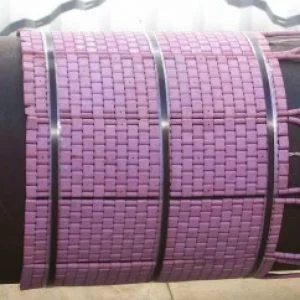
Welcome to NDT Inspect's heat treatment (PWHT) group, a place for professionals to connect and discuss the latest techniques and technologies in heat treatment.
Heat treatment is a process used to alter the physical and mechanical properties of materials through the application of heat and cooling. It is often used to improve the strength, hardness, ductility, and other properties of materials and is an important aspect of ensuring the quality and performance of products and structures in various industries.
Post-weld heat treatment (PWHT) is a specific type of heat treatment that is applied to welded joints and components to improve their properties and performance. It involves the application of heat to the welded joint or component after welding is complete, followed by a controlled cooling process. PWHT is often used to reduce residual stress and improve the toughness and corrosion resistance of welded joints and components.
Our member group offers a platform for sharing knowledge and best practices on heat treatment and its applications in various industries. Join our community of experts from around the world and be a part of the conversation on advancing the practice of heat treatment and its applications in the field of NDT and inspection. Whether you are new to heat treatment or an experienced professional, you'll find valuable resources and a welcoming community in our group.
Updates
-
 3 years ago
Post-weld heat treatment (PWHT) is a process in which a component or structure is heated to a specific temperature and then cooled at a controlled rate. This process is often used in the welding of high-strength steels and other materials, and has several benefits including:
- Reducing residual stresses: Welding can cause residual stresses to form in the material, which can lead to distortion and potential failure. PWHT can help to relieve these stresses and improve the overall integrity of the welded component.
- Improving toughness and ductility: PWHT can help to improve the toughness and ductility of the weld metal and the base metal, making the component more resistant to cracking and failure.
- Improving corrosion resistance: PWHT can help to improve the corrosion resistance of the weld and the base metal, making the component more resistant to corrosion over time.
- Reducing the risk of brittle fractures: PWHT can help to reduce the risk of brittle fractures in the weld and the base metal, which can be a common failure mode in high-strength steels and other materials.
- Improving the overall quality of the weld: PWHT can help to improve the overall quality of the weld, resulting in a stronger, more reliable component.
Overall, PWHT is a valuable process that can help to improve the strength and reliability of welded components and structures. It is an important part of the welding process for many applications, and can help to ensure the long-term performance and safety of the finished product.
-
NDT-Inspect posted an update in the group Heat Treatment (PWHT)3 years ago
PWHT, or post-weld heat treatment, is a process used to reduce the residual stresses and improve the toughness of welded joints in metals. PWHT is typically performed by heating the welded joint to a specific temperature for a specified time, and then allowing it to cool slowly. This can help to relieve the residual stresses that are present in the welded joint, and can also improve the microstructure of the weld and the heat-affected zone (HAZ) surrounding the weld.
PWHT is commonly used in industries such as manufacturing, construction, and oil and gas, where it is important to ensure the strength and durability of welded joints. PWHT is typically performed using specialized equipment, such as furnaces or induction heaters, and is typically carried out by trained and certified personnel. The specific PWHT procedures and parameters used will depend on the type of material, the welding process, and the design and service conditions of the welded joint.
PWHT can help to improve the performance and reliability of welded joints, and can also be used to meet specific design and regulatory requirements. However, PWHT can also introduce additional costs and time to the manufacturing or construction process, and may not be necessary in all cases. As a result, the decision to perform PWHT should be based on a careful assessment of the potential benefits and drawbacks for each specific application.
-
NDT-Inspect posted an update in the group Heat Treatment (PWHT)5 years agoWhen welding stabilised steels (e.g. Types 321 and 347) at heat treatment temperatures of 550 to 750 degrees Celsius for more than an hour, knife attacks occur at the limit. In short, if you apply the PWHT method to a workpiece at a temperature of 600 degrees F (316 degrees C), the local PWHT carbon in low-alloy steels performs the lowest critical transformation temperature known as subcritical.
Steep temperature differences occur when local heat sources cool the base material before welding. The material is heated to a certain temperature and then cooled down. In order to allow cooling, the material must be heated to a certain temperature based on the type and thickness of the material in order to allow cooling. Heat treatment in all its forms can be used to achieve desirable improvements in properties of a material or to recover properties that are influenced by manufacturing processes such as welding or bending.
While most of us do not consider preheating as a heat treatment form, it is used to reduce the hardness of the three components of the welding : the mother metal, the welded metal and the deposited heat affected zone. This reduces the stress caused by material deformations during the welding activity. PWHT prevents the metal from cracking due to the stresses that occur during welding. HIC occurs when a part is heated to a certain temperature and a certain time is held depending on the type and thickness of material.
This treatment is carried out on carbon steel to ensure a stress-free fine grain structure. The preheating is determined when the entire weld is heated until the material thickness reaches the desired minimum temperature.
The welds must not cool down below room temperature after heating. By heating the material before welding it is possible to diffuse hydrogen from the welding area and prevent hydrogen-induced cracks (HIC). Heat treatment is used after welding to heat and cool the steel in order to reduce the amount of brittle microstructure in the steel and thus to reduce the risk of hydrogen cracking to reduce the risk of hydrogen cracking. Until completion of the welding process, a large number of residual stresses can remain in the material, which can increase potential for stress corrosion and hydrogen-induced cracks. During welding, thick parts of the material are retained, resulting in residual stresses due to local heating, rapid cooling, puddles of welding and solidification. In addition to residual stresses, microstructural changes can occur due to the high temperatures caused by the process. This reduces material strength at supercritical temperatures and increases the likelihood of distortion. Heat treatment after the weld can have both positive and negative effects. In steel production, the most common PWHT method is to use reheating as a stress reliever. By preheating, you consume less heat during the welding arc to achieve optimum penetration of the base material and start at an elevated temperature.
The mechanical properties of alloys and steels are determined by the tempering process of the material, and this temperature should not be exceeded during weld seam production and subsequent stress-relieving temperatures if the mechanical properties of the materials are impaired. In the case of chromium moly steels, pre-heating before welding and re-welding can relieve up to 1400oF. Welding processes with heat-treatable low-alloy steels such as chromium and molybdenum steels can influence these requirements by setting minimum and maximum requirements for pre-heated intermediate temperatures. Heat treatment after welding at temperatures between 510 ° C and 650 ° C can reduce the toughness of the welded metal in heat-affected zones.
Care should be taken to locate the heat treatment on stainless steel temperature gradients on both sides of the heated strip, exposing the material to temperatures outside the critical precipitation range. Selecting the temperature for heat treatment after welding ashted stainless steel structures to relieve residual stresses is not easy, especially with ferritic steel, and the code provides little guidance. During an intermediate degassing process, hydrogen is soaked at 300 degrees Celsius in order to free the welding heat zone (HAZ) of hydrogen.
The main difference between stress reduction and PWHT is that the former makes the temperature a minimum transformation temperature for the steel before any microstructural changes occur in the material. The heat treatment required for welding is heat-treatable in arc welding processes for low alloy steels depending on preheated interpass temperature and subsequent hardening process. Re-welding heat treatment (PWHT), as it is commonly called, is a method of reducing and redistributing the residual stress in the material introduced by welding.
Steel production with PWHT is driven by the need to withstand brittle fractures, and reheating reduces residual stresses much more effectively than stress relief. In addition to reducing and redistributing residual stresses during the welding process, higher temperatures in PWHTs allow for temperature, precipitation and aging effects. Stress reduction reduces stress by controlling the heating of a part to a certain temperature, holding it for a certain period and controlling cooling rate. This process, known as post-weld heat treatment (PWHT), is used to reduce residual stresses as a method of hardness control and to improve material strength.
The extent of relaxation of residual stresses introduced in the material by welding depends on the type of material, composition and temperature of the PWHT water and the time when the temperature is heated. Generally, the part should be heated high enough to allow hydrogen to diffuse through the weld (HAZ), but not too high to cause any kind of microstructural change.
The most susceptible materials for heat treatment after welding at temperatures above 950 degrees Celsius are those that use tungsten carbide solutions.
Discussions