
Welcome to NDT Inspect's hydrostatic testing group, a place for professionals to connect and discuss the latest techniques and technologies in hydrostatic testing.
Hydrostatic testing is a specialized technique used to evaluate the integrity and reliability of pressure vessels, pipes, and other components by subjecting them to pressure higher than they would typically encounter in service. It is an important aspect of ensuring the safety and reliability of these components in various industries, including oil and gas, water and wastewater, and transportation.
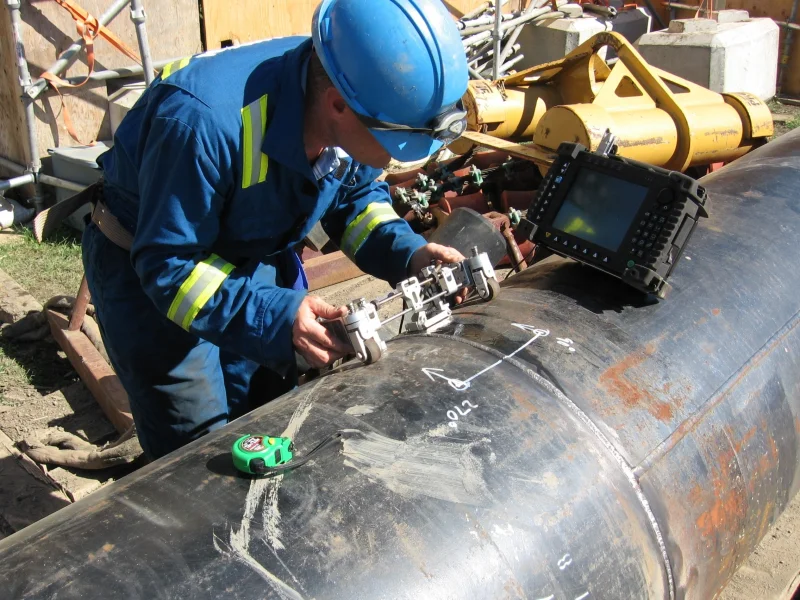
Hydrostatic testing involves the use of specialized equipment and techniques to apply pressure to the component being tested and measure its response to the pressure. The test results can be used to evaluate the component's ability to withstand pressure and identify any potential issues or defects, such as cracks or weld defects. Hydrostatic testing is often used in conjunction with other non-destructive testing (NDT) methods, such as ultrasonic testing and radiographic testing, to provide a comprehensive evaluation of the component.
Our member group offers a platform for sharing knowledge and best practices on hydrostatic testing and its applications in various industries. Join our community of experts from around the world and be a part of the conversation on advancing the practice of hydrostatic testing and its applications in the field of NDT and inspection. Whether you are new to hydrostatic testing or an experienced professional, you'll find valuable resources and a welcoming community in our group.
Updates
-
 deborahflarson replied to a discussion2 years ago
There is no DOT-recommended service life for steel and aluminum cylinders, but the CGA says they may be employed repeatedly as many times as desired if they pass both hydrostatic and visual examinations every five years. Typically, services in hydrostatic testing are mandated to ensure cylinders that are safe and compliant over time.
👍1 -
 NDT-Inspect posted an update in the group Hydrostatic Testing3 years ago
Hydrostatic testing is typically performed on pressure vessels such as pipelines, gas cylinders, boilers, and fuel tanks. These types of vessels are subjected to high pressures in normal operation, and hydrostatic testing is used to ensure that they are strong enough to withstand these pressures without failing or leaking.
Hydrostatic testing is also commonly performed on fire extinguishers, diving tanks, and other types of pressurized equipment. In these cases, the goal of the hydrostatic test is to ensure that the equipment is safe and ready for use, and to identify any defects or damage that may affect its performance.
Hydrostatic testing is usually carried out during the manufacturing process, before the pressure vessel is put into service. It can also be performed on existing pressure vessels as part of a regular maintenance program, to ensure that they are still safe and fit for service.
-
3 years ago
It's important to note that hydrostatic testing is generally considered a safe and reliable method for evaluating the integrity of pressure vessels. However, like any industrial process, there is always a risk of accidents or incidents occurring. Here are a few examples of incidents that have been attributed to hydrostatic testing:
In 2018, a gas cylinder explosion in a factory in India killed two workers and injured several others. The explosion was later determined to have been caused by a faulty valve that failed during hydrostatic testing.
In 2015, a pipeline ruptured during hydrostatic testing in the state of Alabama, spilling thousands of gallons of gasoline into a wetland area and causing an estimated $12 million in damages.
In 2012, a gas explosion at a power plant in China killed 21 workers and injured another 5. The explosion was later found to have been caused by a gas leak that occurred during hydrostatic testing of a gas pipeline.
Again, these incidents are relatively rare and hydrostatic testing is generally considered a safe and reliable method for evaluating the integrity of pressure vessels. However, it's important to follow proper procedures and use caution when conducting hydrostatic testing to minimize the risk of accidents or incidents occurring.
-
3 years ago
Hydrostatic testing is a method of evaluating the integrity of pressure vessels, such as pipelines, gas cylinders, boilers, and fuel tanks, by filling them with a liquid, usually water, and subjecting them to a pressure greater than they will be subjected to in normal use. The pressure is applied and maintained for a specific amount of time, during which the pressure vessel is carefully inspected for leaks or other signs of damage. If no problems are found, the pressure vessel is deemed fit for service. Hydrostatic testing is an important safety measure, as it helps to ensure that pressure vessels are strong enough to withstand the pressures they will encounter in normal operation, which can help prevent accidents or injuries.
-
NDT-Inspect posted an update in the group Hydrostatic Testing3 years ago
Hydrostatic testing is a method of testing the integrity of pipes, pipelines, and other pressure vessels. It involves filling the vessel with water and applying pressure to test its strength and ability to withstand the specified design pressure.
Hydrostatic testing is commonly used to test the integrity of new pipes and pipelines before they are put into service, as well as to periodically test existing pipelines to ensure that they are still safe and reliable.
Hydrostatic testing is an important step in ensuring the safety and reliability of pressure vessels, as it can identify defects and weaknesses that could cause leaks or other problems.
The test pressure is typically higher than the operating pressure of the vessel, and the vessel is carefully monitored during the test to ensure that it does not fail or rupture.
-
NDT-Inspect posted an update in the group Hydrostatic Testing5 years agoHydrostatic tests are a type of pressure test that works by filling a component with water and removing the air contained in the device to pressure the system up to 15 times the design pressure limit of the device. Hydrostatic tests include filling a tank or pipe system with liquid water and dyes to support visual leak detection and pressure of the tank and pipe to a specified test pressure.
The test begins by filling the component with liquid water until the pressure reaches a certain level. Detection pressure tests exert pressure internally to determine whether the vessel has leaks or other weaknesses, such as wall thinning, that could lead to failure. Direct expansion methods are permitted in the United States but federal regulations do not require that a permanent total expansion value be recorded. Hydrostatic test requirements and restrictions for pipelines carrying hazardous liquids are specified in 49 CFR 195 (Lower E) and the requirements and restrictions for natural gas pipelines in 49 CFR 192 (Lower J).1 Hydrostatic tests for pipelines carrying hazardous liquids require testing at 125% of the maximum operating pressure (MOP) for 4 continuous hours and another 4 hours at a pressure of 110% when the mop pipelines are not visible.
Hydrostatic (hydro-) tests are the most commonly used method for the leak testing of pipeline systems, boilers, gas cylinders, fuel tanks and other pressure vessels . Hydrostatic tests are a more accurate method of testing pressure vessels than using points such as pipes or chemical cylinders for possible leaks. After construction, hydrostatic pressure tests are used for high stress (30% SMYs) and natural gas pipelines. Hydrostatic testing is a method of testing equipment such as flammable cylinders, storage tanks, gas cylinders and chemical pipelines using hydrostatic testing equipment. Hydrostatic tests are a way for pressure vessels such as pipelines, sanitary facilities, gas cylinder boilers and fuel tanks to test the strength of leaks. Integrity assessment pressure tests are designed to determine whether a hazardous liquid or gas pipeline has sufficient strength and integrity to prevent leaks, cracks and normal operation in disturbed conditions.
The hydrotest ensures that the cylinder can withstand the necessary operating pressure to make it operational, while ensuring that it does not exhibit any leaks or other deformations that could compromise its effectiveness. The low pressure test is a water test of a high-pressure cylinder that tests whether the cylinder can withstand the required pressure and whether there are no leaks or other deformations that would release the pressure.
When testing low-pressure cylinders, it is put into a protective cage in the event it fails or explodes and connected to a water hose to measure how quickly the system is under pressure. At Koorsen, the high pressure cylinders used in CO2-SCUBA and SCBA systems are emptied before the test and filled with water so that the water temperature remains the same in the cylinder and the water jacket to ensure the same accurate readings. Water jacket is a type of hydrostatic test in which a small pressure vessel is filled with water and deposited in a filled test chamber, the so-called test jacket. The vessel is then pressurized to measure the amount of water displaced by the water that fills the chamber and its expansion. When the vessel is pressurized and sealed, the test jacket is filled with water for a certain period of time.
The total expansion value is determined by measuring the amount of water pressed into the vessel by the test pressure and the amount of water discharged from the vessel. This method provides the same measurements as hydrostatic tests in the water mantle (percent permanent expansion and expansion pressure), but is less accurate.
During hydrostatic testing, the pipes of the container are pressurized at normal operating pressure, which has the advantage, however, that a greater margin of confidence in the usability of the system is created.
-
 doug posted an update in the group Hydrostatic Testing5 years ago
Hydrostatic Testing of Pipe in School Burst Chamber
https://www.youtube.com/watch?v=GIqCE3yLJ4U
👍1
Discussions