
Welcome to NDT Inspect's long range ultrasonics (guided wave ultrasonics) (GUL) group, a place for professionals to connect and discuss the latest techniques and technologies in long range ultrasonic inspection.
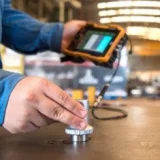
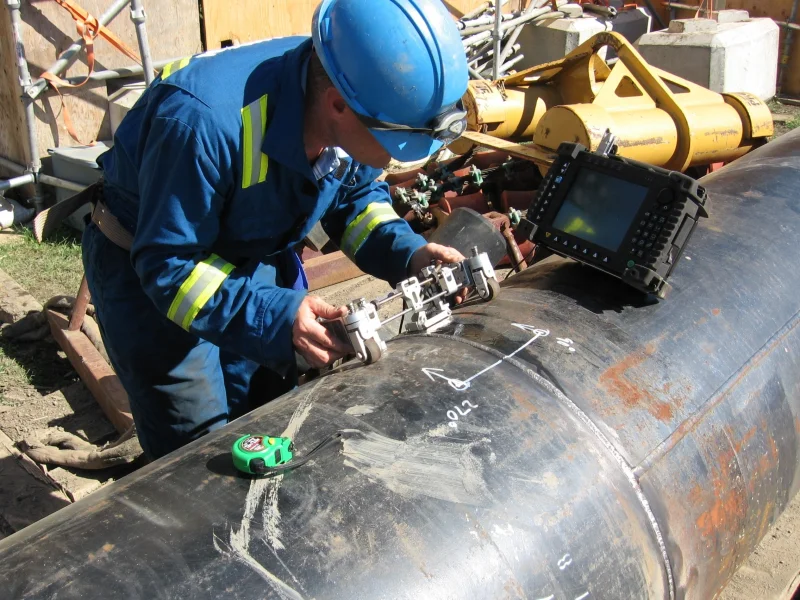
Guided wave ultrasonics (GUL) is a type of non-destructive testing (NDT) method that uses ultrasonic waves to inspect the condition of long, linear components such as pipelines, tanks, and pressure vessels. It is a specialized form of ultrasonic inspection that involves the use of a flexible probe or a permanent sensor mounted on the component to transmit ultrasonic waves along the length of the component.
The ultrasonic waves travel through the material of the component and are reflected back to the probe or sensor, allowing it to detect flaws, defects, or other abnormalities in the component. GUL is a long range inspection method that can inspect components over long distances, making it particularly useful for inspecting components that are difficult to access or in hard-to-reach locations.
GUL is commonly used in industries such as oil and gas, power generation, and aerospace, where it is important to regularly inspect the condition of long, linear components to ensure the integrity and safety of the components. It is a relatively fast and efficient method of inspection that can be used to inspect a wide range of materials and components, including those made of metal, plastic, and composite materials.
Updates
-
 NDT-Inspect posted an update in the group Long Range Ultrasonics (GUL)3 years ago
Long range ultrasonics is a type of nondestructive testing (NDT) method that uses high-frequency sound waves to detect and evaluate defects in materials. Unlike traditional ultrasonic testing, which uses sensors that are in direct contact with the material being tested, long range ultrasonics uses sensors that can be positioned a few inches or even several feet away from the material.
This allows the test to be performed without the need for direct access to the surface of the material, making it well suited for inspecting large or complex structures, such as bridges, buildings, or pipelines. Long range ultrasonics is commonly used to detect cracks, voids, and other defects in materials that could affect their strength and performance.
-
 mohamed-ali-bagath joined the group Long Range Ultrasonics (GUL)4 years ago
 -
 doug posted an update in the group Long Range Ultrasonics (GUL)5 years ago
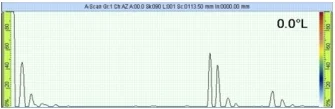
Guided wave testing uses a low-frequency ultrasound operating between 20-100kHz compared to the conventional ultrasonics MHz frequency range used for thickness checks. This allows the ultrasound to be broadcast away from the tool and axially along the pipe in GWT. When this broadcast ultrasound encounters a change in cross-section, the change in acoustic impedance of this region causes an echo of sound to return to the tool for detection. Using the welds on a pipe for calibration and comparing amplitudes of other signals to these welds, it is possible to indicate the severity of any corrosion detected. Furthermore, using additional advanced methods such as C-scan imaging techniques and, in Eddyfi Technologies’ case, a unique secondary focusing method, it is possible to give angular positioning and circumferential extent. However, even with all this post-processing currently, minimum remaining wall loss is not possible using GWT.
https://blog.eddyfi.com/en/how-guided-wave-testing-fits-into-a-pipeline-inspection-program