
Welcome to NDT Inspect's concrete testing group, a place for professionals to connect and discuss the latest techniques and technologies in concrete testing.
Concrete testing is a critical aspect of ensuring the quality and performance of concrete structures, such as buildings, bridges, and infrastructure. It involves the use of various methods and techniques to evaluate the properties and characteristics of concrete, including its strength, durability, and resilience.
Concrete testing can involve a range of methods, including visual inspection, compressive strength testing, and moisture content measurement. These methods are used to assess the quality and suitability of concrete for various applications and to identify any potential issues or defects that may affect the performance of the concrete. Our member group offers a platform for sharing knowledge and best practices on concrete testing and its applications in various industries.
Join our community of experts from around the world and be a part of the conversation on advancing the practice of concrete testing. Whether you are new to concrete testing or an experienced professional, you'll find valuable resources and a welcoming community in our group.
Updates
-
 2 years ago
Concrete testing is an essential part of ensuring the quality and strength of concrete structures.
there are many methods and equipment for concrete inspection and testing
Penetration method, Rebound hammer method, Pull-out test method, Ultrasonic pulse velocity method Ultrasonic pulse echo technology, and Radar wave technology.
Carbonation testing, Half-Cell potential testing.
-
 NDT-Inspect started the discussion Electromagnetic testing to evaluate the condition of reinforcement bars in the forum Concrete Testing3 years ago
Electromagnetic testing, also known as electromagnetic inspection or electromagnetic evaluation, is a non-destructive testing (NDT) method that uses electromagnetic induction to detect changes in the electrical conductivity of a material. This method is commonly used to evaluate the condition of reinforcement bars (rebars) in reinforced concrete structures.
In electromagnetic testing, a transmitter coil is placed near the surface of the concrete and generates a magnetic field. This field creates eddy currents in the reinforcement bars, which generate their own magnetic field. The receiver coil, also placed near the surface of the concrete, measures the strength and phase of the magnetic field created by the eddy currents.
Changes in the electrical conductivity of the reinforcement bars, such as those caused by corrosion or other defects, will affect the strength and phase of the magnetic field, which can be detected by the receiver coil. The resulting data can be used to evaluate the condition of the reinforcement bars and identify potential issues.
Electromagnetic testing is a fast and efficient method for evaluating the condition of reinforcement bars in concrete, and it can be performed on both new and existing structures. It is important to note, however, that this method is not always 100% accurate, and it may not be able to detect all types of defects or abnormalities in the reinforcement. In some cases, it may be necessary to use other methods, such as visual inspection or cutting into the concrete, to obtain a complete assessment of the reinforcement.
-
NDT-Inspect posted an update in the group Concrete Testing3 years ago
Concrete testing is a process used to evaluate the strength, durability, and performance of concrete. Concrete testing is commonly performed to ensure that the concrete used in construction projects meets specified requirements and to diagnose potential problems with the concrete.
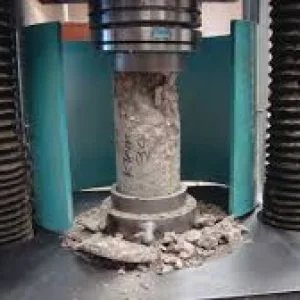
There are several different methods of concrete testing, including compressive strength testing, slump testing, and penetration resistance testing. Compressive strength testing is used to determine the maximum load that a concrete sample can withstand before it fails. Slump testing is used to evaluate the consistency and workability of the concrete. Penetration resistance testing is used to measure the resistance of the concrete to penetration by water or other liquids.
Concrete testing is typically performed by trained and certified technicians using specialized equipment. The results of the tests are used to ensure that the concrete meets the required specifications and to diagnose any problems with the concrete. Concrete testing is an important part of quality control in construction projects, and is essential for ensuring the strength, durability, and performance of the finished structure.
Discussions