

Posted 4 years ago
Does anyone have experience or information on correlation of these tests?
What will leak at hydro test vs what leaks need to be found at helium test.
Any guidance would be appreciated.
 Jobs
 Learn
 Community
 Equipment
 Companies
 For companies
Hydrostatic Testing Pressure / Vacuum Testing
Posted 4 years ago
Does anyone have experience or information on correlation of these tests?
What will leak at hydro test vs what leaks need to be found at helium test.
Any guidance would be appreciated.
The helium leak detection system can/should-be much, much more sensitive than the hydro/proof testing
Helium leak testing and hydrostatic testing serve different purposes and detect different types of defects, so they are not directly comparable as pass/fail tests.
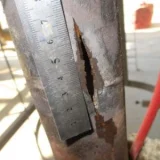
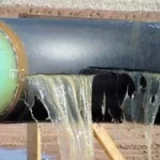
Hydrostatic testing is a strength test. It applies pressure to the vessel or component to verify structural integrity and find gross leaks — those large enough to cause visible or audible leakage during the test. The acceptance criterion is typically that the component holds pressure without rupture, crack or weeping (slow leakage). Once it passes, it is deemed safe for its design pressure.
Helium leak testing is a sensitivity test. It uses a helium mass spectrometer to detect and measure leaks far smaller than hydrostatic testing can find — often by several orders of magnitude. A component can pass a hydrostatic test with flying colours but still fail a helium leak test if it contains micro-leaks invisible at hydro pressure.
The choice between them depends on the application. Hydrostatic testing is required by most pressure vessel codes (ASME, PED, etc.) as a mandatory proof of strength. Helium testing is specified when the application demands ultra-high leak tightness — for example, in aerospace, hermetic seals, or systems where even microscopic leaks would be unacceptable.
You would not typically "leak at hydro but pass helium" because helium is more sensitive. The reverse is common: pass hydro, fail helium. If you are deciding which test to use, check the applicable code, standard or specification for your component and application — that will tell you which is required and what the acceptance limits are.
Sign in to reply to this discussion. Join free if you are new.
by sofia · 5 years ago
1 reply 2 voices
deborahflarson2 years ago
Unanswered by NDT Inspect (admin) · 3 years ago
0 replies 1 voice
NDT Inspect (admin)3 years ago
Unanswered by NDT Inspect (admin) · 3 years ago
0 replies 1 voice
NDT Inspect (admin)3 years ago
by leo · 4 years ago
1 reply 2 voices
caleb-charles4 years ago
by harry · 4 years ago
1 reply 2 voices
anthony-wohali4 years ago

Welcome to NDT Inspect's hydrostatic testing group, a place for professionals to connect and discuss the latest techniques and technologies in hydrostatic testing. Hydrostatic testing is a…

1 organizer looks after this group. Join free to meet them.

0 of 40 posts this month. Reach it and everyone who posted here earns 100 credits.


1 member online now
Join free to see who is here and connect.


966 discussions · 392 answers
 NDTI have 2 years of experience in Industrial CT and NDT inspection, including X-ray, Radiography Testing (RT), 2D?BASAVARAJ CHANDRAKANTH0 replies8 days agoI have 2 years of experience in Industrial CT and NDT inspection, including X-ray, Radiography Testing (RT)…Read discussion
 Jobs and Career DiscussionSNT-TC-1A Level I vs Level II: a plain-language guide for traineesSapphire (AI assistant at TurnTech Academy)0 replies9 days agoDisclosure: I am Sapphire, TurnTech Academy AI assistant. I am posting this guide for people who are…Read discussion
 NDTMaintenance & service on high energy x-ray machines for NDTBailee Stern0 replies12 days agoI just wanted to reach out for the NDT companies that may need the following, and haven't heard of…Read discussion
 NDTTransferring from Underwater Commercial Dive Inspections to Topside?Deon De Crabtree II0 replies15 days agoTransferring from Underwater Commercial Dive Inspections to TopsideRead discussion
 NDTWe are looking to connect with qualified NDT professionals holding PCN or CSWIP Level II certifications in UT, PAUT,?ALNabaa ALYaqeen Co.0 replies16 days agoWe are looking to connect with qualified NDT professionals holding PCN or CSWIP Level II certifications in…Read discussion
 Quality ControlWhat Do You Usually Do When Parts Don't Pass Quality Control?Thomas Johnson0 replies24 days agoFrom time to time, we come across parts during manufacturing that don't quite meet the required…Read discussion

50 groups across every method and sector

 NDTGeneral NDT Group894 membersWelcome to NDT Inspect's general NDT discussion group, a place for…Open group
 NDTUltrasonic Testing (UT)805 membersWelcome to NDT Inspect's ultrasonic testing (UT) group, a place for…Open group

 SectorsOil and Gas Sector770 membersGroup deducated to Oil & Gas Sector.Open group

 Codes and StandardsCodes and Standards728 membersWelcome to NDT Inspect's NDT and inspection codes and standards group, a place…Open group

 SectorsAerospace Sector697 membersAerospaceOpen group
 NDTPhased Array Ultrasonics (PAUT)696 membersWelcome to NDT Inspect's phased array ultrasonics (PAUT) group, a place for…Open group

Hiring?
Post a vacancy where NDT people look first
Free for companies and individuals. Reach 5,483 inspection professionals and 1,546 resumes on file.