


There is a persistent misunderstanding about what an NDT Level 3 is. People assume it is the top of the technician ladder — a very experienced Level II who has been around long enough. It is not. It is a different job, with different work, different risk and a different relationship to the people paying for the inspection.
That confusion shows up in how people search for it. A great many of the queries that reach this site are some variant of Level 3 vacancies, in India, in Saudi Arabia, in the UAE, on rope access contracts. What most of those searches are really asking is: what is this role, am I close to it, and is it worth the effort? So here is the honest version.
What a Level 3 is actually accountable for
A Level I performs tests. A Level II sets up the equipment, interprets the results against acceptance criteria and signs the report. A Level 3 decides how the examination is done in the first place, and then carries the consequences of that decision.
In practice the work breaks into a handful of responsibilities that have very little to do with holding a probe:
- Writing and approving procedures. The technique, the equipment, the calibration, the scanning plan, the reporting format. If it is wrong, it is wrong across every job that used it.
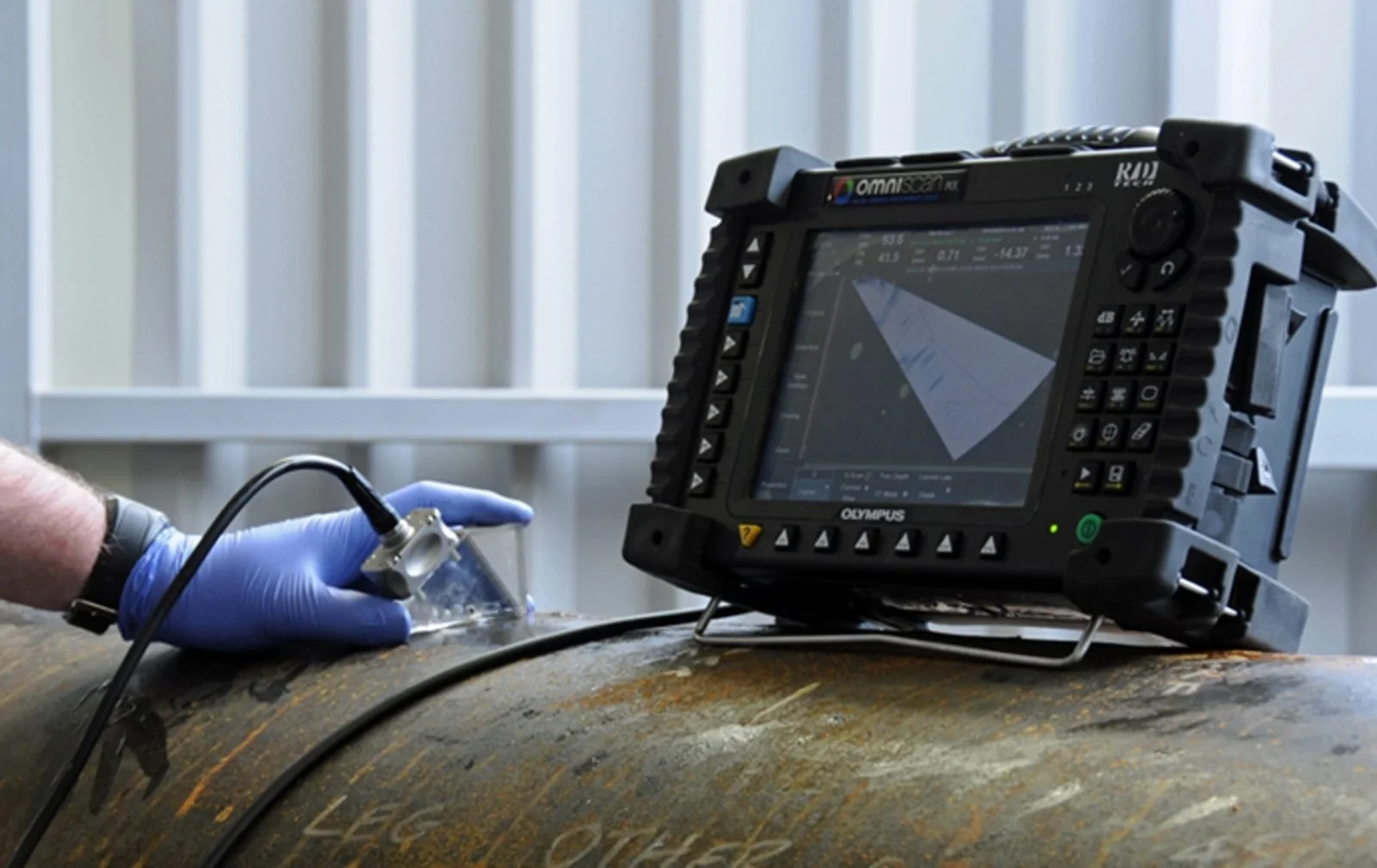
- Selecting the technique for the problem. Deciding that a particular weld configuration needs phased array rather than radiography, or that a surface method will not answer the question being asked.
- Owning the written practice. Under employer-based schemes the written practice is the document that governs how everyone in the company is qualified and certified. The Level 3 owns it.
- Qualifying and examining Level I and Level II personnel. Preparing exams, invigilating, judging practical competence, signing certificates.
- Interpreting the code when it is ambiguous — and it frequently is — and defending that interpretation to a client or a third-party inspector who reads it differently.
- Handling the disputes. When a rejectable indication means cutting out a weld on a critical path, somebody has to hold the line. That is this job.
If none of that appeals, it is worth knowing now. Plenty of excellent technicians deliberately stay at Level II because they prefer the work, and there is nothing wrong with that.
The two routes to Level 3
As with Level II, there are two families of certification and they behave differently.
Employer-based, under ASNT SNT-TC-1A
The employer certifies the Level 3 against its own written practice. In reality almost nobody is taken seriously as an employer-certified Level 3 without having passed the ASNT Level III examinations as supporting evidence, because clients and third-party inspectors want an external benchmark. The certificate still lives with the employer, but the exam results travel with you and they are what people ask about.
Third-party, under ISO 9712
An independent certification body examines and certifies you. Expect a general or basic examination covering materials, manufacturing processes and the principles of the other methods, plus a main method examination that goes into technique selection and procedure writing rather than button-pressing. It is portable, it is what most Gulf and European clients name in their specifications, and it is the route to take if you intend to work internationally.
Exact examination structure, eligibility and the documented experience required all vary by scheme and by method, and they get revised. Read the current requirements published by the certifying body before you book anything. Our certification and training guide and the broader career pathways guide lay the schemes out side by side.
What the examinations really test
The step up from Level II is not more depth in one method. It is breadth plus judgement.
The basic or general paper is where most candidates come unstuck, because it asks about things a specialist has not touched in years: metallurgy, welding and casting processes, how discontinuities form in the first place, and the certification scheme itself as a document. If you have spent eight years doing corrosion mapping, sitting a paper on solidification defects and heat treatment is a genuine shock.
The method paper expects you to write, not just to read. Given a component and a problem, can you specify an examination that will actually answer the question, justify the technique, define the calibration and set out the acceptance criteria? Candidates who have never written a procedure from scratch tend to find this out the hard way.
Two areas repay study out of proportion to their weight. The first is how defects originate, because technique selection follows from expected defect type and orientation — the same logic that decides whether a job needs penetrant or magnetic particle. The second is welding defects and their causes, which underpins a large share of the questions.
The experience nobody warns you about
Certification is the visible part. The part that decides whether you are any good at the job is harder to acquire deliberately.
- Breadth across methods. You do not need to be a working expert in six methods, but you need to know what each one can and cannot answer, and be able to say so in a meeting without hedging.
- Code literacy. Not memorising clause numbers, but knowing which document governs which decision, and how the construction code, the examination standard and the client specification interact when they disagree.
- Writing. Procedures, reports, technical justifications, exam papers, replies to client queries. A Level 3 who cannot write clearly creates work for everybody else.
- The ability to be unpopular. The commercially convenient answer and the technically correct answer are not always the same. Learning to deliver the second one calmly, in writing, is most of the job.
Adjacent certifications also matter more at this level than they did earlier. Inspection qualifications in the pressure equipment and storage tank world sit next to NDT Level 3 in a lot of job descriptions, and people who hold both tend to have more options. Breadth is the currency.
Where the Level 3 jobs actually are
Demand is not evenly spread, and it does not look like Level II demand.
- India carries a large volume of Level 3 roles, partly because so much fabrication and third-party inspection capacity sits there and every one of those organisations needs a Level 3 to authorise its procedures.
- Saudi Arabia and the wider Gulf advertise Level 3 positions steadily, usually specifying ISO 9712 and often naming particular client approvals.
- The UK and Europe tend to recruit into inspection engineering and technical authority roles where Level 3 is one requirement among several rather than the headline.
- Rope access contractors increasingly want Level 3 capability attached to inspection scopes at height, which is a smaller but well paid niche. If that route interests you, the rope access guide covers the ticket side.
There is also a route people miss entirely. Many small and medium contractors cannot justify a full-time Level 3 but are contractually obliged to have one, so they retain a consultant part-time to own the written practice, approve procedures and run examinations. A number of Level 3s build a portfolio of those retainers rather than taking a single salaried post. It is flexible, it pays well, and it comes with real liability — which is exactly why it pays well.
Current openings are listed on the NDT jobs board, and the company directory is a practical way to approach contractors who have not advertised yet.
What it pays, and why the headline number misleads
Level 3 pay is quoted in more shapes than any other role in inspection, which makes single figures close to useless. A salaried Level 3 in a fabrication business, a day-rate Level 3 on an international project and a consultant holding four part-time retainers are doing recognisably different jobs for very different money.
What genuinely moves it: how many methods you can authorise, whether you hold client-specific approvals, whether you can also carry an inspection or integrity qualification, and whether you are willing to take personal responsibility for the written practice of more than one organisation. For market context on the levels below, see our figures on NDT technician salaries and Level II compensation, and treat anything you read as a negotiating starting point rather than a benchmark.
One thing worth being clear-eyed about: the step from Level II day rates to Level 3 income is often smaller than people expect in the first year or two, and it arrives with more accountability and less overtime. The financial case usually builds later, once you have approvals and a reputation.
How long it takes from Level II
Longer than the scheme minimums suggest. The paperwork requirement is one thing; being genuinely ready to author procedures across a range of methods is another, and that tends to be measured in years of varied work rather than months. Technicians who spend a decade on one method for one client are often further from Level 3 than someone with five years across four methods and three industries.
If you are aiming at it deliberately, the most useful thing you can do at Level II is engineer variety: different materials, different codes, different clients, and any opportunity to draft a procedure even if somebody else signs it.
Frequently asked questions
Is NDT Level 3 the same as an NDT engineer?
No, although the roles overlap and job adverts often blur them. Level 3 is a certification describing what you are qualified to authorise. NDT engineer is a job title that may or may not require it. Plenty of Level 3s work as inspection or integrity engineers, and plenty of people with engineer in their title are not Level 3 certified.
Do I need to be Level II in every method to become Level 3?
Not in every method, but you do need real breadth, and you will be examined on knowledge of methods you do not practise daily. Level 3 certification is normally granted method by method, so you can be Level 3 in ultrasonics while holding Level II elsewhere.
Which is better, ASNT Level III or ISO 9712 Level 3?
It depends where you intend to work. ASNT Level III examination results are widely recognised and are the practical benchmark in employer-based markets. ISO 9712 is independent and portable, and it is what Gulf and European client specifications usually name. If you can only do one and you want international mobility, take the third-party route.
Can a Level 3 still work in the field?
Many do, particularly in smaller companies and on advanced ultrasonic work where the Level 3 is the most capable operator on site. But the certification exists to cover technical authority, and the further you go the more the work moves towards procedures, personnel and disputes.
Is Level 3 worth it if I enjoy site work?
Be honest with yourself. If what you like is being on tools, a shutdown crew and a full logbook may suit you better for longer than a technical authority role. Level 3 suits people who enjoy owning decisions and are comfortable being answerable for them.
Where to start
If Level 3 is the target, start by widening rather than deepening: more methods, more codes, more industries, and every chance you get to write something that a Level 3 has to approve. Read the current requirements from the certifying body you intend to use, and be realistic about the basic examination, which is where prepared candidates still fail.
Level 3 and senior inspection roles are posted on the jobs board as they come up, and vacancy alerts will email you the ones matching your methods. If you want to hear how other people made the step, the careers discussion group is where that conversation happens.















0 comments
Sign in to join the discussion.