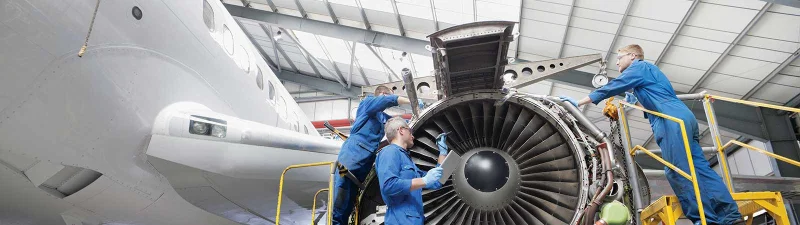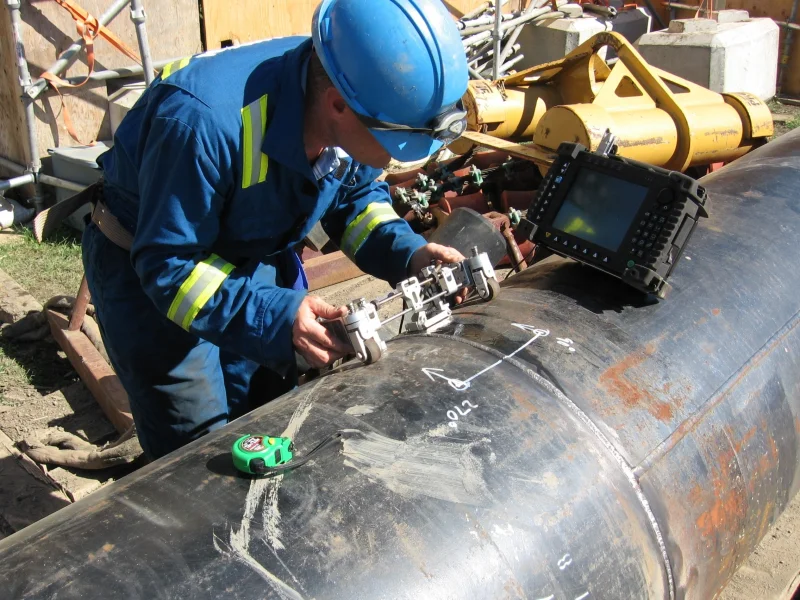

Welcome to NDT Inspect's quality control group, a place for professionals to connect and discuss the latest techniques and technologies in quality control.
Quality control is a critical aspect of ensuring the reliability and performance of products and services in various industries, including manufacturing, construction, and engineering. It involves the use of specialized techniques and processes to evaluate and improve the quality of products and services to meet the requirements and expectations of customers.
Quality control involves the use of a variety of tools and techniques to evaluate the quality of products and services, including inspection, testing, and measurement. It may involve the use of non-destructive testing (NDT) methods, such as ultrasonic testing, radiographic testing, and visual inspection, to identify any potential defects or issues that may affect the quality of the product or service. Quality control also involves the development and implementation of quality management systems to ensure that products and services meet the required standards and specifications.
Our member group offers a platform for sharing knowledge and best practices on quality control and its applications in various industries. Join our community of experts from around the world and be a part of the conversation on advancing the practice of quality control and its applications in the field of NDT and inspection. Whether you are new to quality control or an experienced professional, you'll find valuable resources and a welcoming community in our group.
Updates
-
 VIS_Global_82756 started the discussion Vietnam Supplier Quality: Control the Process, Not Only the Final Shipmenty1 month ago
Vietnam Supplier Quality: Control the Process, Not Only the Final Shipment
By VIS Global Editorial Team
Vietnam is an important manufacturing and sourcing location for international buyers, but changing the country of production does not change the fundamentals of supplier quality. A polished quotation, an attractive sample, or a successful first shipment is not proof that a factory can consistently control materials, processes, subcontractors, and production changes.
The central lesson is simple: buyers should manage quality as a process, not as a final checkpoint.
Final inspection remains useful, but it occurs after most purchasing, material, labor, and scheduling decisions have already been made. If a defect is systematic—incorrect material, an uncontrolled process parameter, weak workmanship instructions, or an unapproved subcontractor—discovering it only when the goods are packed leaves fewer practical options. Rework may delay shipment, replacement may disrupt sales plans, and accepting the goods may transfer the problem to customers.
A stronger Vietnam quality program begins before production.
Start by translating expectations into verifiable requirements
Purchase orders often contain commercial details but leave product quality open to interpretation. Expressions such as “export quality,” “same as approved sample,” or “high-grade material” are difficult to verify consistently. Buyers should instead create a controlled specification package covering dimensions, materials, performance requirements, labeling, packaging, workmanship, approved samples, defect classifications, and applicable test methods.
The requirements should distinguish three separate questions: What must the product do? How will conformity be verified? What happens when a result is outside the agreed limit?
This distinction is particularly important when a product will be placed on the Vietnamese market or when Vietnamese requirements form part of the contract. Vietnam’s Law on Product and Goods Quality distinguishes between products managed on the basis of declared applicable standards and potentially unsafe products managed under relevant technical regulations. The law also defines testing, inspection and certification as different conformity-assessment activities. Buyers should therefore identify the product-specific legal route rather than treating a general inspection report as evidence of every form of compliance.
Verify the production system behind the sample
A pre-order supplier audit should test whether the proposed factory can reproduce the approved result under normal production conditions. The audit should go beyond collecting certificates. It should examine the actual manufacturing site, equipment, production flow, incoming-material controls, calibration practices, employee instructions, nonconforming-product handling, traceability, subcontracting, and corrective-action records.
The objective is not to produce a decorative audit score. It is to identify which controls are dependable, which depend on individual employees, and which do not yet exist.
A factory may have technically capable machinery while lacking disciplined change control. Another may document procedures well but fail to segregate rejected material. Buyers should convert such findings into an action plan with named responsibilities, objective evidence, and completion dates. Critical gaps should be closed before mass production, not merely noted for a future visit.
Put inspection points where risk enters the process
Inspection timing should follow product risk. Incoming-material checks are valuable when material grade, color, components, or packaging affect the final result. First-article verification can confirm that the production setup matches the approved specification. During-production inspection can reveal whether process drift, operator variation, or changing inputs are creating repeated defects. Pre-shipment inspection can then evaluate finished quantity, workmanship, function, labeling, packaging, and other agreed characteristics.
This sequence does not mean that every order requires every inspection type. A simple repeat product from a proven supplier may justify a lighter plan. A new factory, complex assembly, short launch schedule, safety-related characteristic, or history of inconsistent results deserves stronger controls.
The key is to document why each control point exists. Inspection should answer a defined risk question, not simply create another report.
Make evidence usable for decisions
A useful quality report must connect observations to contractual requirements. It should identify the inspected product and order, sampling method, specification revision, test equipment, results, defect classifications, photographs, and unresolved deviations. Ambiguous statements such as “quality generally acceptable” should not replace measurable findings.
Buyers also need decision rules before an inspection begins. Who may approve a deviation? Can a failed characteristic be reworked? Is reinspection required? Must repaired units be separated from untouched production? Without agreed rules, commercial urgency can turn every failure into an improvised negotiation.
Data should also be compared across orders. Repeated minor defects, recurring packaging damage, or frequent last-minute specification questions may reveal a process weakness even when individual shipments are accepted. Trend review allows the buyer and supplier to address causes rather than repeatedly sorting symptoms.
Separate product verification from regulatory approval
Third-party inspections, factory audits, laboratory tests, and regulatory conformity procedures can support one another, but they are not interchangeable. Vietnam’s national standards and quality authority describes a state-management system covering standards, technical regulations, conformity assessment, accreditation, metrology, and product-quality responsibilities. The applicable route depends on the product and intended market.
For that reason, buyers should confirm current requirements with the responsible Vietnamese authority or qualified regulatory specialist for the specific product. They should not assume that an overseas certificate, a supplier declaration, or a passed commercial inspection automatically satisfies a Vietnamese technical regulation.
Build supplier improvement into the commercial relationship
Quality improves when expectations and consequences are predictable. Supplier agreements should define access for inspection, notification of material or process changes, approval of subcontractors, record retention, corrective-action timelines, and responsibility for verified nonconformity costs. Performance reviews should consider responsiveness and recurrence, not only the percentage of accepted shipments.
The best suppliers are not those that claim never to encounter defects. They are those that detect problems early, protect affected material, investigate causes honestly, and prevent recurrence.
For companies sourcing from Vietnam, the objective should not be to inspect quality into a finished shipment. It should be to create a controlled chain of evidence from supplier selection through production and release. That approach gives both buyer and factory a clearer basis for decisions—and makes quality more repeatable.
About the author
VIS Global provides testing, inspection, auditing and certification-related services, including supplier verification, factory audits and product inspections in Vietnam and other Asian sourcing markets. More information is available at https://visgl.com/.
Sources
Vietnam Government Portal — Law No. 05/2007/QH12 on Product and Goods Quality: https://vanban.chinhphu.vn/?classid=1&docid=51259&pageid=27160&typegroupid=3
Vietnam National Commission for Standards, Metrology and Quality: https://tcvn.gov.vn/general-introduction/10/08/2022/?lang=enaan
-
 jameswilson replied to a discussion1 year ago
NDT plays a vital role in ensuring quality control in manufacturing by enabling early defect detection, minimizing costs, and preventing failures. Common techniques like ultrasonic, eddy current, and radiographic testing each offer unique advantages depending on the material and defect type.
However, challenges like inspecting complex geometries, difficult materials, or achieving sufficient depth can limit effectiveness. Overcoming these often involves specialized equipment, combining methods, or custom procedures.
The key to maximizing NDT benefits lies in selecting the right technique for the application, staying updated with advancements, and continuously improving inspection processes.
-
jameswilson posted an update1 year ago
Discover the key differences between Quality Control and Quality Inspection in the oil and gas industry. Learn how both approaches ensure operational excellence, safety, and compliance.
Read to know more: https://www.vegascg.com/blog/difference-between-quality-control-and-inspection-in-manufacturing/

-
 NDT-Inspect posted an update in the group Quality Control (QC)3 years ago
Quality control accidents are incidents that occur in the quality control process, which is the process of ensuring that products or services meet certain standards of quality. These accidents can be caused by various factors, such as human error, equipment failure, or poor training.
Quality control accidents can lead to defective products being released, which can have serious consequences, such as injury or death in the case of faulty products, or loss of customer trust and reputation in the case of defective services.
To prevent quality control accidents, it is important to have robust quality control processes in place, including adequate training and quality control procedures, and to regularly review and update these processes to ensure they are effective.
Quality control accidents in the oil and gas industry can have serious consequences, as the products and processes involved in the industry can be hazardous. Here are a few examples of quality control accidents in the oil and gas industry:
In 2010, the Deepwater Horizon oil spill occurred as a result of a quality control accident during the drilling of a well in the Gulf of Mexico. The accident resulted in the release of millions of barrels of oil into the ocean, causing significant environmental damage and economic losses.
In 2016, a quality control accident at a natural gas processing plant in Algeria resulted in an explosion and fire that killed over 30 people and injured many more. The accident was caused by a failure to properly maintain equipment, which resulted in a gas leak.
In 2017, a quality control accident at an oil refinery in Texas resulted in the release of over 1,300 pounds of sulfur dioxide, a toxic gas, into the atmosphere. The accident was caused by a failure to properly maintain equipment, which resulted in the release of the gas.
In 2018, a quality control accident at an oil rig in the North Sea resulted in the release of over 200 tons of oil into the ocean. The accident was caused by a failure to properly maintain equipment, which resulted in a leak in the oil pipeline.
-
NDT-Inspect started the discussion Maximizing the Benefits of NDT for Quality Control in Manufacturing in the forum Quality Control3 years ago
Quality control is a critical aspect of manufacturing, as it ensures that products meet certain specifications and standards and helps to prevent costly defects or failures.
Non-destructive testing (NDT) is a valuable tool for achieving high levels of quality control, as it allows practitioners to evaluate the properties and condition of materials, components, and systems without causing damage.
In this discussion, we will explore the various ways in which NDT can be used for quality control in manufacturing, as well as best practices and case studies for maximizing the benefits of this technique.
Subtopic 1: Common NDT Techniques for Quality Control in Manufacturing
There are several NDT techniques that are commonly used for quality control in manufacturing, including:
Ultrasonic testing: This technique uses high-frequency sound waves to inspect the internal structure of a material or component. It is often used to detect defects such as cracks, voids, and inclusions.
Eddy current testing: This technique uses an alternating current to induce a magnetic field in a conductive material, and then measures the response of the material to the field. It is often used to detect surface and near-surface defects such as cracks, corrosion, and delaminations.
Radiographic testing: This technique uses X-rays or gamma rays to create an image of the internal structure of a material or component. It is often used to detect defects such as cracks, voids, and inclusions, as well as to measure thickness and dimensions.
Subtopic 2: Benefits of Using NDT for Quality Control
There are several benefits of using NDT for quality control in manufacturing, including:
Early identification of defects: By using NDT to inspect materials and components at various stages of the manufacturing process, practitioners can identify defects early on, before they become a problem. This allows manufacturers to take corrective action before the product is shipped, which can save time and money.
Prevention of costly defects or failures: By using NDT to identify and correct defects, manufacturers can prevent costly failures or recalls down the line. This is especially important in industries such as aerospace and automotive, where defects or failures can have serious consequences.
Reduction of the need for destructive testing: NDT allows practitioners to evaluate materials and components without causing damage, which can save time and money compared to destructive testing methods. In some cases, NDT may be the only feasible option for evaluating certain materials or components, such as historic artifacts or one-of-a-kind prototypes.
Subtopic 3: Challenges of Using NDT for Quality Control
While NDT is a powerful tool for quality control, there are also challenges that practitioners may face when using it, including:
Complex geometries: Some materials and components may have complex shapes or features that make them difficult to inspect using NDT techniques. For example, an airplane wing may have intricate internal structures that are hard to access or visualize using ultrasonic testing. To overcome this challenge, practitioners may need to use specialized NDT equipment or techniques, or develop custom inspection procedures.
Difficult-to-inspect materials: Some materials may be difficult to inspect using NDT techniques due to their physical properties or characteristics. For example, materials with high conductivity, such as copper or aluminum, may interfere with eddy current testing, while materials with high attenuation, such as lead or concrete, may absorb X-rays or gamma rays, making it difficult to get a clear image using radiographic testing. In these cases, practitioners may need to use alternative NDT techniques or adjust the inspection parameters to get accurate and reliable results.
Limited depth of inspection: Some NDT techniques may only be able to inspect the surface or near-surface of a material or component. For example, ultrasonic testing may only be able to detect defects that are within a few millimeters of the surface. In these cases, practitioners may need to use multiple NDT techniques or combine NDT with other inspection methods, such as visual inspection or destructive testing, to get a complete picture of the material or component.
-
NDT-Inspect started the discussion Quality control vs quality assurance in the forum Quality Control3 years ago
Quality control and quality assurance are both important aspects of ensuring that a product or service meets certain standards of quality. However, they are not the same thing. Quality control is the process of verifying that a product or service meets certain standards of quality by inspecting it. This typically involves identifying and addressing any defects or issues with the product or service.
Quality assurance, on the other hand, is the process of ensuring that a product or service will meet certain standards of quality. This typically involves creating processes and procedures to prevent defects or issues from occurring in the first place.
In other words, quality control focuses on detecting and fixing problems, while quality assurance focuses on preventing them.
-
NDT-Inspect posted an update in the group Quality Control (QC)3 years ago
Quality control (QC) is a process used to ensure that products or services meet specified requirements and standards of quality. QC is an important part of the manufacturing and service delivery process, as it helps to identify and correct defects and inconsistencies, and to ensure that the final product or service meets the requirements of the customer or the end user.
QC typically involves a combination of inspection, testing, and verification activities, which are performed at different stages of the production or delivery process. These activities may be performed by trained and certified personnel, using specialized equipment and techniques, and may be governed by specific QC standards and procedures. The results of the QC activities are typically documented and used to identify and address any problems or nonconformities, and to improve the quality of the products or services.
QC is an important part of quality management, and is typically integrated with other quality management processes, such as quality planning, quality assurance, and quality improvement. By ensuring that products and services meet specified requirements and standards of quality, QC can help to improve customer satisfaction, reduce waste and rework, and improve the overall performance and competitiveness of the organization.
-
NDT-Inspect posted an update in the group Quality Control (QC)4 years ago
QA QC Presentation in Oil and Gas
Discussions