










What’s new on NDT Inspect
Latest NDT & inspection industry news, jobs and community updates
Live updates from the NDT Inspect community: new NDT job vacancies, product launches from the virtual exhibition, forum discussions and member activity across ultrasonic, radiographic, phased array and every other inspection method. Join free to post and follow.
Members post updates, comment, react and follow the companies they work with. Already a member? Sign in
-
Internal rotary inspection is a type of nondestructive testing (NDT) method used to inspect the inside of tubes, pipes, and other cylindrical components. The test is performed using a specialized tool, known as an internal rotary inspection tool, which is inserted into the component being tested. The tool is equipped with sensors, such as ultrasonic sensors or eddy current sensors, which are used to detect and evaluate defects in the material.
The tool is rotated inside the component, allowing the sensors to scan the entire inner surface of the component. The results of the inspection are typically displayed in the form of a visual representation of the component, showing the location and severity of any defects that were detected. This method is commonly used to inspect components in the aerospace, automotive, and oil and gas industries.
-
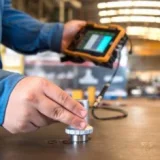
Hardness testing is a process used to measure the resistance of a material to deformation, indentation, or penetration. Hardness is a measure of the material's ability to withstand external forces, such as wear, abrasion, and erosion. Hardness testing is commonly used to evaluate the mechanical properties of metals, alloys, and other materials.
There are several different methods of hardness testing, including Rockwell, Brinell, Vickers, and Shore. These methods use different types of indenters, such as diamonds or steel balls, to apply a known force to the surface of the material being tested. The resulting indentation is measured and used to calculate the hardness of the material. Hardness testing is used in a wide range of industries, including manufacturing, construction, and mining, to ensure that materials meet specified hardness requirements and to monitor changes in the hardness of materials over time.
-
Eddy current testing is a type of nondestructive testing (NDT) method that uses the principles of electromagnetism to detect and evaluate defects in conductive materials.
The test is performed by passing a high-frequency alternating current through a coil, which creates a magnetic field around the coil. When the coil is placed near a conductive material, eddy currents are induced in the material.
These eddy currents create their own magnetic fields, which interact with the magnetic field generated by the coil. Any changes in the magnetic field, such as those caused by defects in the material, can be detected and evaluated using specialized equipment.
This method is commonly used to inspect metal parts, such as tubes and wires, for cracks, corrosion, and other defects that could affect their strength and performance.
-
Dye penetrant testing, also known as liquid penetrant testing, is a type of nondestructive testing (NDT) method used to detect surface-breaking defects in a wide range of materials, including metals, ceramics, and composites.
The test is performed by applying a liquid penetrant to the surface of the material being tested.
The penetrant is allowed to seep into any surface-breaking defects, such as cracks or pores, and is then removed from the surface. A developer is then applied, which draws the penetrant out of the defects and creates a visible indication that can be easily seen and evaluated.
This method is commonly used to inspect metal parts, such as welds and castings, for defects that could affect their strength and performance.
-
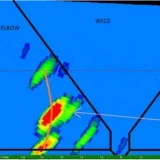
Corrosion mapping is a process used to identify and evaluate corrosion on the surface of a material, component, or system. Corrosion mapping typically involves using a variety of techniques, such as visual inspection, electrochemical measurements, and nondestructive testing methods, to assess the extent, severity, and distribution of corrosion on the surface being evaluated.
The results of the corrosion mapping process are typically presented in the form of a corrosion map, which is a visual representation of the corrosion on the surface, showing the location, size, and severity of the corrosion.
Corrosion mapping is used to help identify and prioritize corrosion prevention and repair efforts, and to improve the reliability and performance of materials, components, and systems.
-
 UpdateNDT-Inspect posted an update in the group Magnetic Particle Inspection (MPI) (MT)3 years ago
Magnetic particle testing is a nondestructive testing (NDT) method that is used to detect surface and slightly subsurface discontinuities in ferromagnetic materials.
The test is performed by applying a magnetic field to the material and then introducing a fine iron or iron oxide powder, called magnetic particles, onto the surface of the material.
The magnetic particles will be attracted to areas of the material where there are discontinuities, such as cracks, and will form a visible indication that can be easily seen and evaluated.
This method is commonly used to inspect welds, castings, and other ferromagnetic materials for defects that could affect the strength and performance of the material.
-
- What is nondestructive testing (NDT)?
- NDT is a type of testing that evaluates the integrity, reliability, and performance of materials, components, or systems without causing damage or altering their original condition.
- What are some common NDT methods?
- Some common NDT methods include ultrasonic testing, radiographic testing, magnetic particle testing, and visual inspection.
- What are NDT methods used to detect and evaluate?
- NDT methods are used to detect and evaluate defects, cracks, corrosion, and other types of damage that could affect the safety and performance of materials and systems.
- In which industries is NDT commonly used?
- NDT is commonly used in industries such as manufacturing, construction, aerospace, oil and gas, and transportation.
- What are some advantages of NDT over other testing methods?
- Some advantages of NDT over other testing methods include that it is non-invasive, cost-effective, and does not alter the original condition of the material or system being tested. NDT can also provide detailed and accurate information on the condition of the material or system being tested.
-
Nondestructive testing (NDT) is a type of testing that is used to evaluate the properties of a material, component, or system without causing damage.
This is in contrast to destructive testing, where the material is intentionally damaged in order to determine its properties. Nondestructive testing methods are used in a wide range of industries, including aerospace, manufacturing, construction, and oil and gas.
Some common nondestructive testing methods include visual inspection, ultrasonic testing, radiographic testing, and magnetic particle testing.
These methods use specialized equipment to detect flaws or irregularities in materials without damaging them. Nondestructive testing is an important tool for ensuring the safety and integrity of materials and structures.
-
-
-
-
-
-
PAUT & TOFD Training with InternshipSIGMA NDT SERVICES PVT.LTD · India
NDT TRAINING OFFER:
Greetings,
We are offering unique practical based certification training on NDT. We are giving Training programs for NDT has been designed in such a way that theory is blended with on-job […] -
-
-
-
-
-
Omniscan MX, MX1, and MX2 User's Manual
-
UpdateNDT-Inspect posted an update in the group Magnetic Particle Inspection (MPI) (MT)3 years agoMPT Magnetic Particle Testing (NDT)
-
-
-
-