



NDT Community News Feed
Latest NDT & inspection industry news, jobs and community updates
Live updates from the NDT Inspect community: new NDT job vacancies, product launches from the virtual exhibition, forum discussions and member activity across ultrasonic, radiographic, phased array and every other inspection method. Join free to post and follow.
Sign in to post updates and join the conversation.
-
 3 years ago
Nondestructive testing (NDT) is a type of testing that evaluates the properties of materials, components, and systems without causing any permanent damage. This is in contrast to destructive testing, which involves intentionally damaging or breaking a test object in order to evaluate its properties.
NDT is used to identify defects, evaluate the condition of materials and components, and assess the performance and reliability of structures and systems. It employs a wide range of techniques and equipment, including ultrasonic testing, radiographic testing, and magnetic particle testing, to evaluate the properties of test objects without causing any permanent damage.
Destructive testing, on the other hand, is used to evaluate the strength, durability, and other mechanical properties of materials and components. This is typically done by intentionally applying stresses to the test object until it fails or breaks. Destructive testing is often used to determine the maximum load or stress that a material or component can withstand before it fails.
Overall, NDT and destructive testing are both important tools for evaluating the properties of materials, components, and systems. NDT is often used to identify defects and assess the condition of structures and components, while destructive testing is used to evaluate the strength and durability of materials and components.
-
NDT-Inspect started the discussion Challenges that are faced in the field of nondestructive testing (NDT) in the forum NDT3 years ago
There are several challenges that are faced in the field of nondestructive testing (NDT), including:
Accessibility: One of the biggest challenges in NDT is accessing the parts of a structure or component that need to be tested. In some cases, the test object may be too large or too complex to reach all the areas that need to be inspected. In other cases, the test object may be in a difficult location or a hazardous environment, making it difficult or unsafe to access.
Complexity: NDT involves the use of sophisticated techniques and equipment to evaluate the properties of materials, components, and systems. These techniques can be complex and require a high level of expertise to use effectively. As a result, NDT technicians must have a strong understanding of the principles and techniques of NDT, as well as the ability to interpret test results and communicate their findings to others.
Cost: NDT can be a costly process, as it requires specialized equipment and trained personnel to perform the tests. This can be a barrier for some organizations, particularly smaller ones that may not have the resources to invest in NDT equipment and training.
Standardization: There are many different NDT methods, and each method has its own unique set of advantages and limitations. This can make it difficult to compare and standardize test results, as different methods may produce different results for the same test object.
Overall, these challenges can make it difficult to effectively implement NDT in some situations, but the benefits of NDT, such as improved safety and reliability
-
NDT-Inspect started the discussion Several types of failures that can occur in oil and gas refineries in the forum Oil and Gas General group3 years ago
Corrosion: Corrosion is a common problem in refineries, as the harsh chemicals and high temperatures used in the refining process can attack the structural materials and cause them to deteriorate. This can lead to a variety of problems, including leaks, fires, and structural failure.
Mechanical failure: Mechanical failures can occur due to a variety of factors, including wear and tear, improper maintenance, and design flaws. These failures can range from small issues, such as valve leaks, to major incidents, such as explosions.
Process upsets: Process upsets can occur when the normal operating conditions of a refinery are disrupted, such as when equipment fails or raw materials are contaminated. These upsets can lead to a variety of problems, including reduced efficiency, increased emissions, and damage to equipment.
Human error: Human error is a common cause of failures in refineries, as the complex processes involved in refining require precise control and monitoring. Missteps or mistakes by operators or maintenance personnel can lead to accidents and incidents.
Overall, it is important for refineries to implement robust prevention and mitigation measures to reduce the risk of failures and ensure the safety and reliability of their operations.
-
NDT-Inspect started the discussion Interesting facts about nondestructive testing (NDT) in the forum NDT3 years ago
One of the earliest known examples of NDT was the use of fire to test the quality of iron and steel. In ancient times, blacksmiths would heat a piece of metal and then quench it in water to see how it performed. If the metal cracked or broke when it was quenched, it was considered to be of poor quality. This method of testing was known as "fracture testing" and was used to identify defects and impurities in the metal.
While this method was relatively crude, it demonstrated the concept of NDT by allowing the blacksmith to test the properties of the metal without destroying it. Today, NDT has advanced significantly and employs a wide range of sophisticated techniques and equipment to evaluate the properties of materials, components, and systems.
-
3 years ago
There are a variety of options for nondestructive testing (NDT) training, including:
Technical schools: Many technical schools and community colleges offer NDT training programs, which can provide students with the knowledge and skills needed to pursue a career in this field.
Online courses: There are a number of online courses and training programs available that cover the principles and techniques of NDT. These courses may be self-paced or structured as part of a more formal program.
Professional organizations: Many professional organizations, such as the American Society for Nondestructive Testing (ASNT) and the British Institute of NDT (BINDT), offer NDT training and certification programs.
On-the-job training: Many NDT technicians learn through on-the-job training, either as part of an apprenticeship program or through hands-on experience working with more experienced technicians.
It is important to research the different options available and choose a program that is accredited and meets your specific needs and goals.
-
NDT-Inspect started the discussion What Ultrasonic thickness testing report should include? in the forum Ultrasonic Testing3 years ago
Identifying information: This should include the name of the company or organization performing the inspection, the name of the individual performing the inspection, and the date of the inspection.
Description of the test object: This should include a detailed description of the object being tested, including its material, dimensions, and any other relevant characteristics.
Inspection method: This should describe the specific ultrasonic thickness testing method used, as well as any equipment or tools used during the inspection.
Test results: This should include a detailed list of the thickness measurements taken, along with the location on the object where each measurement was taken.
Conclusions: This should include any conclusions or observations made by the inspector based on the test results, as well as any recommendations for further action or follow-up.
Images or drawings: If applicable, the report should include photographs or drawings of the object being tested, as well as any relevant details or annotations.
Certification: The report should include a statement indicating that the inspection was performed in accordance with relevant standards and guidelines, and that the results are accurate and reliable.
👍3 -
 afsalmuhammedfc3812gmail-com posted a new resume.3 years ago
 -
 NDT-Inspection-vacancies Hiring posted a new job.3 years ago
 -
 arunnura posted a new resume.3 years ago
 -
3 years ago
Phased array inspection can be performed on materials at high temperatures, although there are some limitations and considerations to keep in mind.
One of the main challenges of performing phased array inspection at high temperatures is the effect of temperature on the ultrasonic waves being used. At high temperatures, the ultrasonic wave velocity may be affected, leading to errors in the measurements. Additionally, the temperature of the material being inspected can affect the properties of the material itself, such as the attenuation and scattering of the ultrasonic waves.
To overcome these challenges, specialized probes and techniques may be required to ensure accurate and reliable results. For example, the use of cooled probes can help to minimize the effects of temperature on the ultrasonic waves. Additionally, the use of specialized software tools can help to compensate for the effects of temperature on the ultrasonic wave velocity and other material properties.
It is important to carefully evaluate the suitability of phased array inspection for high temperature applications, and to follow proper procedures and use calibrated equipment in order to obtain reliable results.
👍1 -
NDT-Inspect started the discussion NDT and Inspection Vacancy Alerts in the forum Jobs and Career Discussion3 years ago
Keep an eye on the latest job openings with our vacancy alerts feature! Simply add alerts for the types of job openings you are interested in to receive notifications when new positions become available. You'll be among the first to know about new opportunities, and you can apply right away to increase your chances of getting the job.
To add vacancy alerts, simply create an account on our website and select the types of job openings you want to be notified about. You can choose to receive alerts via email or text message, so you'll never miss a chance to apply for a position that's right for you.
Don't miss out on your dream job - add vacancy alerts today and be the first to know about new job openings in your field.
-
NDT-Inspect posted an update3 years ago
API (American Petroleum Institute) inspectors are professionals who are trained and certified to inspect oil and gas industry facilities and equipment to ensure compliance with API standards and regulations. API inspectors are responsible for conducting inspections of a wide range of facilities and equipment, including pipelines, storage tanks, pressure vessels, and drilling rigs.
API inspectors typically have a strong background in engineering or a related field, and many have completed a formal training program in API inspection principles and practices. In order to become an API inspector, candidates must meet the following requirements:
Education: API inspectors must have a minimum of a high school diploma or equivalent. Many API inspectors also have a college degree in engineering or a related field.
Experience: API inspectors must have a certain amount of experience in the oil and gas industry, depending on the level of certification they are seeking. For example, candidates seeking Level II certification must have at least three years of experience in the oil and gas industry, while candidates seeking Level III certification must have at least five years of experience.
Examination: API inspectors must pass a written and practical examination that tests their knowledge of API standards and regulations and their ability to apply them in a practical setting.
Once candidates have met these requirements and have been issued an API certification, they are considered qualified to perform inspections of oil and gas industry facilities and equipment in accordance with API standards and regulations. API inspectors are highly skilled professionals who play a critical role in ensuring the safety and reliability of oil and gas industry facilities and equipment.
API inspectors are typically employed by oil and gas companies, inspection firms, and government agencies, and may work on a full-time or contract basis. They may be based at a specific facility or may be required to travel to different locations to perform inspections. API inspectors typically work in challenging and sometimes hazardous environments, and must be able to work independently and make sound judgments in a variety of situations.
-
NDT-Inspect posted an update3 years ago
The ASME (American Society of Mechanical Engineers) Piping Inspector Qualification (PIQ) is a professional certification program that recognizes individuals who have demonstrated a high level of knowledge and experience in the inspection of piping systems. The program is administered by the ASME and is based on the ASME B31.3 Code for Process Piping.
To qualify for the ASME PIQ, candidates must meet the following requirements:
Education: Candidates must have a high school diploma or equivalent and must have completed a course of study in piping inspection that meets the requirements of the ASME B31.3 Code.
Experience: Candidates must have a minimum of five years of experience in piping inspection, including at least three years of experience in the construction or inspection of piping systems.
Examination: Candidates must pass a written examination that tests their knowledge of the ASME B31.3 Code and piping inspection principles and practices.
Once candidates have met these requirements and have been issued a PIQ certificate, they are considered qualified to perform inspections of piping systems in accordance with the ASME B31.3 Code. The ASME PIQ is recognized as a mark of competence in the field of piping inspection and can be beneficial for professionals in terms of career advancement and job prospects.
-
3 years ago
The PCN (Personnel Certification in Non-Destructive Testing) program is a professional certification program for non-destructive testing (NDT) personnel that is administered by the British Institute of Non-Destructive Testing (BINDT). The PCN program is based on the international standard ISO 9712 and is recognized internationally as a mark of competence in NDT.
To become PCN qualified in NDT, candidates must meet the following requirements:
Education: Candidates must have a minimum of a secondary education, or equivalent, and must have completed an NDT training program that meets the requirements of ISO 9712.
Experience: Candidates must have a certain amount of NDT experience, depending on the level of certification they are seeking. For example, candidates seeking Level II certification must have at least two years of NDT experience, while candidates seeking Level III certification must have at least six years of NDT experience, including at least three years at the Level II level.
Examination: Candidates must pass a written and practical examination in order to be certified. The examination is based on the requirements of ISO 9712 and tests the candidates' knowledge and skills in NDT.
To get started, candidates should first ensure that they meet the education and experience requirements for the level of certification they are seeking. They should then contact the BINDT or a recognized NDT training organization to enroll in a training program and register for the examination. Once they have completed the training and passed the examination, candidates will be issued a PCN certificate and will be qualified to perform NDT at the appropriate level.
-
3 years ago
ASME is a professional organization that develops codes and standards for the design, construction, and inspection of boilers and other pressure vessels. One of the ASME standards that pertains to boiler inspection is the ASME Boiler and Pressure Vessel Code (BPVC).
The BPVC includes several sections that address the inspection of boilers and other pressure vessels, including:
Section I: This section covers the rules for the construction of power boilers, which are boilers that generate steam for the purpose of power generation or for use in a processing application.
Section IV: This section covers the rules for the construction of heating boilers, which are boilers that generate steam or hot water for heating or other non-power generation purposes.
Section VIII: This section covers the rules for the construction of pressure vessels, which are containers designed to hold gases or liquids at high pressure.
The BPVC specifies the requirements for the design, materials, fabrication, and inspection of boilers and pressure vessels. It includes guidelines for the use of various NDT methods, such as radiographic testing, ultrasonic testing, and magnetic particle testing, to detect defects or imperfections in these components.
The BPVC also includes requirements for the periodic inspection of boilers and pressure vessels. These inspections are typically required at regular intervals in order to ensure the safety and reliability of these components. The specific inspection requirements will depend on the type of boiler or pressure vessel, its age and condition, and the potential consequences of failure.
Adherence to the ASME BPVC is important for the safe operation of boilers and pressure vessels. It helps to ensure that these components are designed, constructed, and inspected to a consistent and high standard, which helps to reduce the risk of accidents or failures.
-
3 years ago
The Australian non-destructive testing (NDT) standard, AS/NZS ISO 9712, is a standard that specifies the requirements for the qualification and certification of personnel who perform NDT. The standard is based on the international standard ISO 9712 and is applicable to a wide range of industries, including manufacturing, construction, and aviation.
The standard covers the qualification and certification of personnel who perform NDT in four levels:
Level 1: This is the basic level of NDT certification, which is suitable for personnel who perform simple NDT tasks under the supervision of a Level 2 or Level 3 personnel.
Level 2: This is the intermediate level of NDT certification, which is suitable for personnel who can perform NDT independently and supervise Level 1 personnel.
Level 3: This is the advanced level of NDT certification, which is suitable for personnel who can perform NDT independently and supervise Level 1 and Level 2 personnel.
Level 4: This is the highest level of NDT certification, which is suitable for personnel who have a broad and in-depth knowledge of NDT and can act as technical experts or consultants.
AS/NZS ISO 9712 specifies the minimum requirements for the training and experience of personnel who wish to obtain NDT certification at each level. It also includes requirements for the periodic recertification of personnel and the use of appropriate NDT methods and equipment.
The use of certified personnel is important in the NDT industry, as it helps to ensure that NDT inspections are carried out to a consistent and high standard. Adherence to the Australian NDT standard helps to ensure the safety and reliability of the components and structures being inspected.
-
3 years ago
ASME V Article 4 is a standard that provides guidelines for the ultrasonic inspection of welds in materials used in the construction of boilers, pressure vessels, and nuclear power plant components. The standard covers the selection and qualification of personnel, equipment, and techniques used in ultrasonic inspection, as well as the acceptance criteria for welds.
Ultrasonic inspection is a non-destructive testing (NDT) method that uses high-frequency sound waves to inspect the material or component. In the context of ASME V Article 4, ultrasonic inspection is used to detect defects, such as cracks, in welds.
The standard specifies the minimum requirements for the selection and qualification of personnel who perform ultrasonic inspections, including their training and experience. It also includes requirements for the equipment used in ultrasonic inspection, including the use of calibrated equipment and the maintenance of equipment records.
In terms of inspection techniques, ASME V Article 4 requires that the ultrasonic inspection method be appropriate for the specific type of weld being inspected and the material from which it is made. The standard also specifies the minimum acceptance criteria for welds based on the type of defect being detected and the location of the weld in the component or vessel.
ASME V Article 4 is an important standard in the field of NDT, as it provides a consistent set of guidelines for the ultrasonic inspection of welds in critical components and structures. Adherence to these guidelines helps to ensure the safety and reliability of these components and structures.
-
NDT-Inspect posted an update in the group Aerospace Sector3 years ago
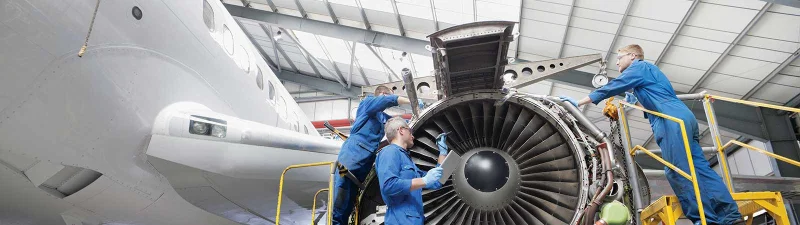
Non-destructive testing (NDT) is an important aspect of aircraft maintenance, as it allows for the inspection of aircraft components and structures without causing damage. There are several NDT methods that are commonly used in the aviation industry, including:
Visual inspection: Visual inspection involves examining the surface of an aircraft component or structure using the naked eye or specialized instruments. This is often the first step in NDT and can identify obvious defects or imperfections.
Radiographic testing: Radiographic testing uses X-rays or gamma rays to create an image of the internal structure of an aircraft component or structure. This can be used to detect cracks, corrosion, or other internal defects that may not be visible to the naked eye.
Ultrasonic testing: Ultrasonic testing uses high-frequency sound waves to inspect the material or component. This can be used to detect surface and subsurface defects, such as cracks, voids, and inclusions.
Eddy current testing: Eddy current testing uses electromagnetic fields to detect imperfections in conductive materials. This can be used to inspect the surface of aircraft components for cracks or other defects.
Magnetic particle testing: Magnetic particle testing uses a magnetic field to detect surface and slightly subsurface imperfections in ferromagnetic materials. This can be used to inspect aircraft components made of ferrous materials, such as steel or iron.
NDT inspections of aircraft components and structures are typically required at regular intervals in order to ensure the safety and reliability of the aircraft. The specific NDT methods used and the frequency of inspections will depend on the type of aircraft, the component or structure being inspected, and the regulatory requirements for that particular aircraft.
-
NDT-Inspect started the discussion There are several considerations when it comes to the inspection of pipelines: in the forum Pipeline Inspection3 years ago
Safety: The safety of personnel and the public is of the utmost importance during pipeline inspections. This may involve the use of specialized safety equipment and procedures, as well as the development of emergency response plans.
Regulations: Pipeline inspections must comply with relevant local, state, and federal regulations. This may involve obtaining the necessary permits, following specific inspection protocols, and submitting reports to regulatory agencies.
Types of inspection: Different types of inspections may be required for different types of pipelines, depending on their purpose, size, and location. Some common types of inspections include visual inspections, corrosion inspections, and integrity assessments.
Inspection intervals: The frequency of inspections will depend on the type of pipeline, its age and condition, and the potential consequences of failure. Older pipelines or those in areas with high risk of damage may require more frequent inspections.
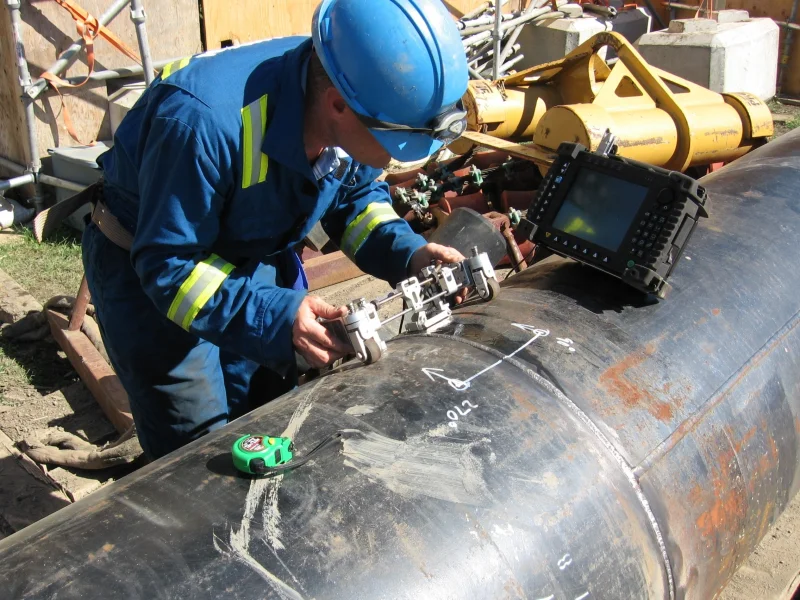
Inspection methods: There are several NDT methods that can be used for pipeline inspections, including visual inspection, radiographic testing, ultrasonic testing, and magnetic particle testing. The choice of inspection method will depend on the specific needs of the pipeline and the type of defects or imperfections being sought.
Data management: Pipeline inspections generate a large amount of data, which must be organized and analyzed in order to identify any issues and make informed decisions about repairs or maintenance. This may involve the use of specialized software or database systems.
Repair and maintenance: If defects or imperfections are detected during an inspection, appropriate repairs or maintenance must be carried out in order to ensure the continued safe operation of the pipeline. This may involve the use of specialized equipment and procedures, as well as the coordination of repair or maintenance activities with relevant stakeholders.
-
NDT-Inspect posted an update in the group General NDT Group3 years ago
Non-destructive testing (NDT) is a wide range of analytical techniques used to evaluate the properties of a material, component, or system without causing damage. NDT is often used to inspect materials and structures in various industries, including manufacturing, construction, and aviation.
There are several different NDT methods, including:
Visual inspection: This method involves using the naked eye or special instruments to examine the surface of a material or component.
Radiographic testing: This method uses X-rays or gamma rays to create an image of the internal structure of a material or component.
Ultrasonic testing: This method uses high-frequency sound waves to inspect the material or component.
Magnetic particle testing: This method uses a magnetic field to detect surface and slightly subsurface imperfections in ferromagnetic materials.
Eddy current testing: This method uses electromagnetic fields to detect imperfections in conductive materials.
Liquid penetrant testing: This method involves applying a liquid to the surface of a material or component and then removing the excess liquid. Any flaws or imperfections on the surface will allow the liquid to penetrate and can be detected through the use of a developer.
Advanced NDT refers to the use of specialized techniques or equipment in NDT, such as advanced imaging techniques or automated inspection systems. These techniques can provide more detailed or accurate inspection results, but may also require specialized training or expertise to use effectively.
Below are some advanced NDT methods and their advantages over conventional NDT methods:
Computed Tomography (CT) Scanning: CT scanning is a radiographic technique that uses multiple X-ray images taken from different angles to create a detailed, 3D image of the material or component being inspected. CT scanning has several advantages over traditional radiographic testing, including the ability to inspect complex internal features, the ability to create cross-sectional images, and the ability to detect small flaws that may be missed by other NDT methods.
Thermography: Thermography is a technique that uses a thermal imaging camera to detect temperature variations on the surface of a material or component. This can be used to detect flaws or imperfections that may not be visible to the naked eye, as well as to monitor the temperature of critical components during operation.
Laser-induced Fluorescence (LIF): LIF is a technique that uses lasers to excite fluorescent dyes or pigments applied to the surface of a material or component. The resulting fluorescence can be used to detect cracks, defects, or other surface imperfections that may not be visible using other NDT methods.
Acoustic Emission Testing (AE): AE is a technique that uses sensors to detect and analyze the acoustic waves that are emitted from a material or component under stress. This can be used to detect cracks, defects, or other types of damage in a material or component.
Automated Inspection Systems: Automated inspection systems use advanced imaging techniques and robotics to perform NDT inspections with high accuracy and speed. These systems can be programmed to detect a wide range of flaws and imperfections and can be used to inspect large or complex components that would be difficult to inspect manually.
In general, advanced NDT methods offer several advantages over conventional NDT methods, including the ability to detect smaller or more subtle flaws and imperfections, the ability to inspect complex internal features, and the ability to provide more detailed or accurate inspection results. However, advanced NDT methods may also require specialized training or equipment and may be more expensive to use.
-
NDT-Inspection-vacancies Hiring posted a new job.3 years ago
-
NDT-Inspection-vacancies Hiring posted a new job.3 years ago
-
NDT-Inspection-vacancies Hiring posted a new job.3 years ago
-
NDT-Inspection-vacancies Hiring posted a new job.3 years ago
-
NDT-Inspection-vacancies Hiring posted a new job.3 years ago