

NDT Community News Feed
Latest NDT & inspection industry news, jobs and community updates
Live updates from the NDT Inspect community: new NDT job vacancies, product launches from the virtual exhibition, forum discussions and member activity across ultrasonic, radiographic, phased array and every other inspection method. Join free to post and follow.
Sign in to post updates and join the conversation.
-
 NDT-Inspection-vacancies Hiring posted a new job.3 years ago
 -
 NDT-Inspect posted a new post.3 years ago
Non-destructive testing (NDT) is a type of testing that is used to evaluate the properties of a material, component, or system without causing damage or…
 Where is NDT used? IndustriesNon-destructive testing (NDT) is a type of testing that is used to evaluate the properties of a material, component, or system without causing damage or…
-
NDT-Inspect posted an update3 years ago
Please be advised that the posts displayed in this section are limited to those from Groups that you have joined.
-
NDT-Inspect started the discussion API, methods for calculating remaining life of equipment in the forum Codes and Standards3 years ago
API (American Petroleum Institute) is a trade organization that develops standards for the oil and gas industry. API has developed several methods for calculating the remaining life of equipment and structures in the oil and gas industry, including methods for calculating the remaining life due to corrosion.
One such method is the API RP 571: Damage Mechanisms Affecting Fixed Equipment in the Refining Industry. This guideline provides a framework for identifying, evaluating, and mitigating damage mechanisms, including corrosion, that can affect fixed equipment in the refining industry.
To calculate the remaining life of equipment due to corrosion using the API RP 571 method, the following steps should be followed:
Identify the type of corrosion that is occurring: This includes identifying the type of corrosion (such as uniform corrosion, pitting corrosion, or crevice corrosion) and the specific corrosion mechanism that is at play (such as galvanic corrosion or corrosion caused by stress).
Determine the corrosion rate: This involves measuring the thickness loss of the material over a specific period of time, typically in millimeters per year (mm/year). The corrosion rate can be determined through various methods, including corrosion coupons, electrochemical techniques, or corrosion probes.
Determine the remaining life: Once the corrosion rate has been determined, you can use it to calculate the remaining life of the equipment. This can be done by dividing the remaining thickness of the material by the corrosion rate. For example, if the remaining thickness of a material is 5 mm and the corrosion rate is 0.5 mm/year, the remaining life of the structure would be 10 years.
It is important to note that these calculations are estimates and the actual remaining life of the equipment may be longer or shorter depending on various factors. It is also important to regularly monitor the equipment to ensure that it is safe and in good condition.
-
NDT-Inspect posted an update3 years ago
Refractory inspection is an important process in the maintenance and operation of industrial facilities, particularly those involved in high-temperature processes such as furnaces, boilers, and kilns. The refractory lining of these systems plays a critical role in maintaining the structural integrity of the equipment and ensuring its safe and efficient operation. As such, it is essential to regularly inspect and maintain the refractory lining to ensure that it is in good condition and able to perform its intended function.
API (American Petroleum Institute) standards provide guidelines for the inspection and maintenance of refractory linings in the oil and gas industry. These standards, which are developed and maintained by a committee of industry experts, outline the procedures and requirements for refractory inspection and repair, including the use of specialized tools and equipment, and the training and qualifications of personnel involved in the process.
There are several methods of refractory inspection, including visual inspection, hammer testing, and ultrasonic testing. Visual inspection involves a thorough examination of the refractory lining by a trained inspector, who looks for signs of damage, deterioration, or wear. Hammer testing involves tapping the refractory lining with a hammer and listening for changes in sound that may indicate damage or weaknesses in the lining. Ultrasonic testing involves the use of specialized equipment to measure the thickness of the refractory lining and detect any irregularities or imperfections.
In addition to the inspection methods mentioned above, there are several factors that can impact the condition and performance of a refractory lining. These include the type and quality of the refractory material used, the temperature and operating conditions of the equipment, and the presence of corrosive or abrasive materials. It is important to consider these factors when conducting a refractory inspection, as they can help to identify potential problems or areas of concern.
API standards also outline the requirements for the repair and maintenance of refractory linings. This may involve patching or repairing damaged areas, or replacing the lining altogether if it is beyond repair. It is important to follow these guidelines and use appropriate materials and techniques to ensure that the refractory lining is restored to its proper condition and able to perform its intended function.
Overall, refractory inspection is an essential part of the maintenance and operation of industrial facilities. By following API standards and using the appropriate inspection and repair methods, it is possible to ensure that the refractory lining is in good condition and able to effectively protect the equipment and maintain its safe and efficient operation.
-
NDT-Inspection-vacancies Hiring posted a new job.3 years ago
-
NDT-Inspection-vacancies Hiring posted a new job.3 years ago
-
NDT-Inspection-vacancies Hiring posted a new job.3 years ago
-
NDT-Inspection-vacancies Hiring posted a new job.3 years ago
-
NDT-Inspect started the discussion Maximizing the Benefits of NDT for Quality Control in Manufacturing in the forum Quality Control3 years ago
Quality control is a critical aspect of manufacturing, as it ensures that products meet certain specifications and standards and helps to prevent costly defects or failures.
Non-destructive testing (NDT) is a valuable tool for achieving high levels of quality control, as it allows practitioners to evaluate the properties and condition of materials, components, and systems without causing damage.
In this discussion, we will explore the various ways in which NDT can be used for quality control in manufacturing, as well as best practices and case studies for maximizing the benefits of this technique.
Subtopic 1: Common NDT Techniques for Quality Control in Manufacturing
There are several NDT techniques that are commonly used for quality control in manufacturing, including:
Ultrasonic testing: This technique uses high-frequency sound waves to inspect the internal structure of a material or component. It is often used to detect defects such as cracks, voids, and inclusions.
Eddy current testing: This technique uses an alternating current to induce a magnetic field in a conductive material, and then measures the response of the material to the field. It is often used to detect surface and near-surface defects such as cracks, corrosion, and delaminations.
Radiographic testing: This technique uses X-rays or gamma rays to create an image of the internal structure of a material or component. It is often used to detect defects such as cracks, voids, and inclusions, as well as to measure thickness and dimensions.
Subtopic 2: Benefits of Using NDT for Quality Control
There are several benefits of using NDT for quality control in manufacturing, including:
Early identification of defects: By using NDT to inspect materials and components at various stages of the manufacturing process, practitioners can identify defects early on, before they become a problem. This allows manufacturers to take corrective action before the product is shipped, which can save time and money.
Prevention of costly defects or failures: By using NDT to identify and correct defects, manufacturers can prevent costly failures or recalls down the line. This is especially important in industries such as aerospace and automotive, where defects or failures can have serious consequences.
Reduction of the need for destructive testing: NDT allows practitioners to evaluate materials and components without causing damage, which can save time and money compared to destructive testing methods. In some cases, NDT may be the only feasible option for evaluating certain materials or components, such as historic artifacts or one-of-a-kind prototypes.
Subtopic 3: Challenges of Using NDT for Quality Control
While NDT is a powerful tool for quality control, there are also challenges that practitioners may face when using it, including:
Complex geometries: Some materials and components may have complex shapes or features that make them difficult to inspect using NDT techniques. For example, an airplane wing may have intricate internal structures that are hard to access or visualize using ultrasonic testing. To overcome this challenge, practitioners may need to use specialized NDT equipment or techniques, or develop custom inspection procedures.
Difficult-to-inspect materials: Some materials may be difficult to inspect using NDT techniques due to their physical properties or characteristics. For example, materials with high conductivity, such as copper or aluminum, may interfere with eddy current testing, while materials with high attenuation, such as lead or concrete, may absorb X-rays or gamma rays, making it difficult to get a clear image using radiographic testing. In these cases, practitioners may need to use alternative NDT techniques or adjust the inspection parameters to get accurate and reliable results.
Limited depth of inspection: Some NDT techniques may only be able to inspect the surface or near-surface of a material or component. For example, ultrasonic testing may only be able to detect defects that are within a few millimeters of the surface. In these cases, practitioners may need to use multiple NDT techniques or combine NDT with other inspection methods, such as visual inspection or destructive testing, to get a complete picture of the material or component.
-
NDT-Inspection-vacancies Hiring posted a new job.3 years ago
-
NDT-Inspection-vacancies Hiring posted a new job.3 years ago
-
NDT-Inspection-vacancies Hiring posted a new job.3 years ago
-
NDT-Inspection-vacancies Hiring posted a new job.3 years ago
-
NDT-Inspect started the discussion What are some factors that can affect the accuracy and reliability of NDT? in the forum NDT3 years ago
There are several factors that can impact the accuracy and reliability of NDT inspection results. Some of these factors include:
- The skill and experience of the NDT technician
- The condition of the equipment being used for the inspection
- The condition of the surface being inspected (e.g. cleanliness, surface roughness, temperature, humidity)
- The type of material being inspected (e.g. metal, concrete, composites)
- The size and shape of the feature being inspected
- The presence of defects or other anomalies in the material being inspected
- The presence of external factors that may interfere with the inspection, such as electromagnetic fields or temperature changes
It is important for NDT technicians to be aware of these factors and to take them into consideration when performing inspections in order to ensure the accuracy and reliability of their results.
-
NDT-Inspect posted an update3 years ago
- What is your primary method of NDT? (Main NDT method that you perform?)
-
NDT-Inspect posted a new post.3 years ago
Phased array ultrasonics is a highly advanced and effective method for non-destructive testing.
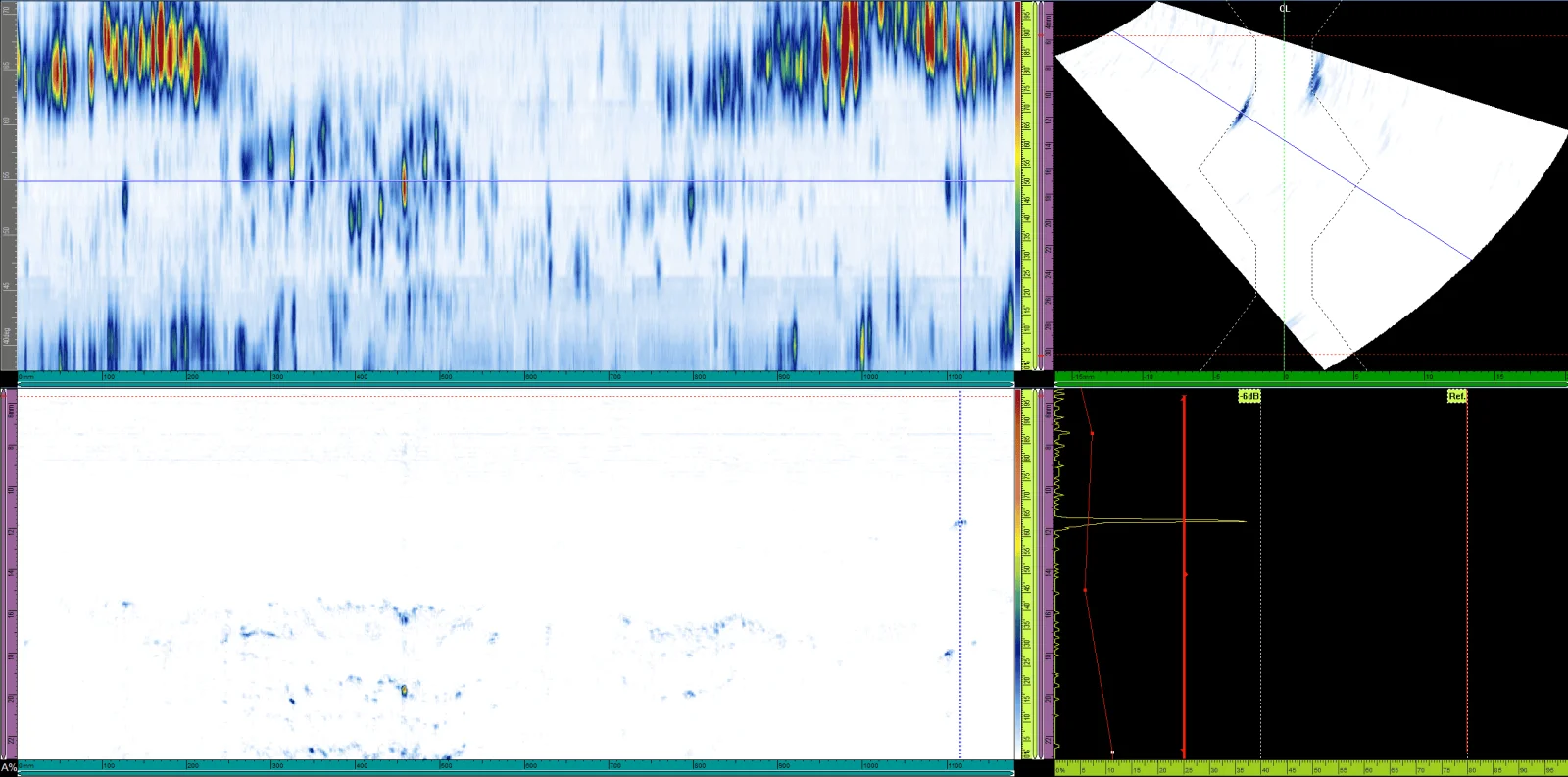 Phased Array Ultrasonics (PAUT)Phased array ultrasonics is a highly advanced and effective method for non-destructive testing.
-
NDT-Inspect posted a new post.3 years ago
Non-destructive testing (NDT) is a field that involves the use of specialized techniques to inspect and evaluate the integrity of materials, components, and systems without…
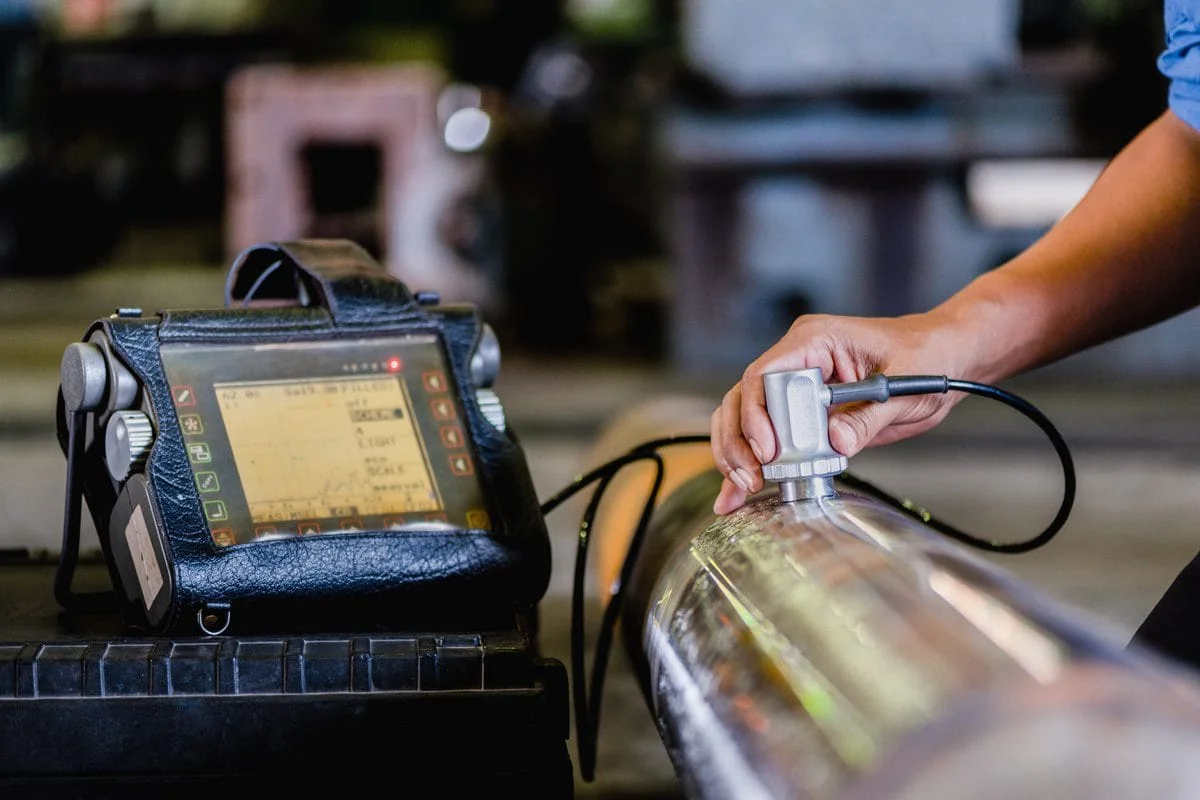 NDT Technician SalaryNon-destructive testing (NDT) is a field that involves the use of specialized techniques to inspect and evaluate the integrity of materials, components, and…
-
3 years ago
Intelligent pigging is a non-invasive method of inspecting pipelines and other infrastructure. It involves the use of specialized pigs, also known as intelligent pigs or smart pigs, which are equipped with sensors and other technology that can collect data and perform inspections as they travel through pipelines. Intelligent pigging is used in a variety of industries, including oil and gas, water and sewage, and more, to detect problems early, reduce maintenance costs, and improve safety and efficiency.
There are several types of intelligent pigs that can be used for different purposes. Geometry pigs, for example, are used to measure the internal dimensions of pipelines and detect deformations or corrosion. Corrosion pigs use sensors to detect corrosion and other forms of deterioration in the pipeline walls. Smart pigs, on the other hand, can be programmed to perform multiple inspections and gather a wide range of data, including information about the pipeline's geometry, corrosion, and flow characteristics.
Intelligent pigging is a cost-effective and efficient way to inspect pipelines and other infrastructure. It allows engineers and technicians to detect problems early, before they become serious and costly to repair. In addition, because intelligent pigging is non-invasive, it does not require the shutdown of pipelines or other disruptions to operations. This makes it a preferred method of inspection in many industries, particularly in situations where downtime is costly or difficult to achieve.
In practice, intelligent pigging is typically performed by launching an intelligent pig into a pipeline and retrieving it once it has completed its inspection. The data and information collected by the pig is then analyzed to identify any problems or issues that may need to be addressed. This process can be repeated at regular intervals to monitor the condition of the pipeline over time and ensure its continued integrity and reliability.
In conclusion, intelligent pigging is an important tool for inspecting pipelines and other infrastructure. It allows engineers and technicians to detect problems early, reduce maintenance costs, and improve safety and efficiency. Its non-invasive nature and cost-effectiveness make it a preferred method of inspection in many industries, helping to ensure the integrity and reliability of pipelines and other critical infrastructure.
-
NDT-Inspect started the discussion Creating CV for NDT position in the forum Jobs and Career Discussion3 years ago
A good CV (curriculum vitae) is an important tool for job seekers, as it provides potential employers with an overview of your skills, experience, and qualifications. When applying for an NDT (nondestructive testing) position, it is important to tailor your CV to highlight your relevant skills and experience in NDT and other related fields. Here are some tips for creating a strong CV for an NDT position:
Use a clear, concise format: Your CV should be easy to read and understand, with clear headings and bullet points to highlight your key skills and achievements.
Include a personal statement: Use your personal statement to introduce yourself and outline your career goals and relevant experience.
List your education and qualifications: Include any relevant education, training, and certifications that you have obtained in NDT or related fields.
Highlight your NDT experience: Emphasize any NDT-specific experience that you have, including any NDT techniques you are proficient in and any relevant projects or jobs you have worked on.
Include any additional skills: In addition to your NDT skills, consider including any other relevant skills or experience that may be of interest to potential employers, such as computer skills or knowledge of industry-specific software.
Proofread your CV: Make sure to carefully proofread your CV to ensure that it is free of spelling and grammar errors, as a well-written CV can make a strong impression on potential employers.
Overall, a well-written CV that clearly communicates your NDT skills and experience can help you stand out to potential employers and increase your chances of landing an NDT position.
-
NDT-Inspect started the discussion To become NDT professional? in the forum Jobs and Career Discussion3 years ago
Nondestructive testing (NDT) technicians are responsible for evaluating the condition and integrity of structures and components using a variety of NDT methods, such as ultrasonic testing, radiographic testing, and magnetic particle testing. NDT technicians typically work in industries such as aerospace, automotive, energy, and construction, and may be employed by companies that provide NDT services to these industries, or by the industries themselves. NDT technicians may also be self-employed and work as independent contractors.
In order to qualify for NDT jobs, individuals typically need to have completed specialized training and education in NDT and obtained certification from a professional organization, such as the American Society for Nondestructive Testing (ASNT) or the British Institute of Non-Destructive Testing (BINDT). In some cases, NDT technicians may also need to obtain a license or certification from the government in order to practice NDT professionally.
NDT technicians typically work in industrial and manufacturing environments, and may be required to work in challenging conditions, such as in confined spaces or at heights. They may also need to travel to different locations to perform NDT services. NDT technicians typically work full-time, and may be required to work evenings and weekends on occasion.
NDT technicians are skilled professionals who play a vital role in ensuring the safety and reliability of products and operations. They use specialized equipment and techniques to evaluate the condition of structures and components, and are trained to identify and report on defects and other problems. NDT technicians are often required to work under tight deadlines and may need to work under pressure in order to meet the needs of their clients.
For individuals interested in pursuing a career as an NDT technician, there are many resources available to help find job opportunities in this field. One such resource is the NDT Inspect portal, which has a section dedicated to NDT vacancies ( /ndt-inspection-jobs/ ). This section may be a useful tool for those looking to find NDT jobs and explore career opportunities in the field. Overall, NDT jobs offer a rewarding career path for individuals who are interested in using their technical skills to help ensure the safety and reliability of products and operations. With the right training and experience, NDT technicians can enjoy a stable and well-paying career in a variety of industries.
-
3 years ago
Separators are commonly used in oil and gas refineries to separate different components of a mixture, such as oil, water, and gas. There are several types of separators, including:
Oil-water separators: Oil-water separators are used to separate oil and water mixtures, such as produced water from oil and gas wells. These separators use a combination of gravity, sedimentation, and filtration to separate the oil and water, and the separated oil is typically collected and processed further.
Gas-liquid separators: Gas-liquid separators are used to separate gas and liquid mixtures, such as natural gas and water. These separators use a combination of gravity, centrifugal force, and coalescence to separate the gas and liquid, and the separated gas is typically collected and processed further.
Three-phase separators: Three-phase separators are used to separate mixtures of oil, water, and gas, such as those found in oil and gas wells. These separators use a combination of gravity, centrifugal force, and coalescence to separate the three phases, and the separated phases are typically collected and processed further.
Overall, separators work by using physical processes, such as gravity, sedimentation, and centrifugal force, to separate the different components of a mixture based on their densities and other physical properties. The separated components are then collected and processed further as needed.
👍1 -
3 years ago
There are many different destructive testing methods that are used to evaluate the properties of materials, components, and systems. Some of the most common destructive testing methods include:
Tensile testing: Tensile testing involves applying a tensile force to a sample of material until it breaks, in order to determine the material's tensile strength, yield strength, and other mechanical properties.
Compression testing: Compression testing involves applying a compressive force to a sample of material until it crushes or breaks, in order to determine the material's compressive strength and other mechanical properties.
Bend testing: Bend testing involves bending a sample of material until it breaks or deforms, in order to determine the material's bend strength and other mechanical properties.
Hardness testing: Hardness testing involves applying a force to the surface of a material using a hard, pointed object, in order to determine the material's resistance to indentation and its hardness.
Impact testing: Impact testing involves striking a sample of material with a hard object or projectile, in order to determine the material's ability to withstand impact loads.
Fatigue testing: Fatigue testing involves applying a series of repeated loads to a sample of material until it fails, in order to determine the material's fatigue strength and other fatigue properties.
Fracture toughness testing: Fracture toughness testing involves applying a load to a sample of material until it fractures, in order to determine the material's resistance to fracture and its fracture toughness.
Overall, destructive testing methods are used to evaluate the strength, durability, and other mechanical properties of materials and components, and are typically used to determine the maximum load or stress that a material or component can withstand before it fails.
-
3 years ago
The process of performing a dye penetrant inspection, also known as liquid penetrant testing, typically involves the following steps:
Surface preparation: The surface of the test object must be clean and free of contaminants, such as dirt, oil, and grease, in order for the penetrant to be effective. The surface is usually cleaned using a solvent or detergent and then dried.
Application of penetrant: The penetrant is applied to the surface of the test object using a brush, spray, or dip method. The penetrant is allowed to penetrate into any surface defects, such as cracks or pores, for a specified time period.
Removal of excess penetrant: Any excess penetrant is removed from the surface of the test object using a cleaner or solvent. This step is important to ensure that the penetrant remaining in the defects is clearly visible.
Application of developer: A developer is applied to the surface of the test object to draw the penetrant out of any defects and create a visible indication of the defects. The developer is allowed to dry for a specified time period.
Inspection: The surface of the test object is examined using a suitable light source, such as a UV light, to identify any indications of defects. The size, shape, and location of the indications are recorded and evaluated to determine the severity of the defects.
Overall, the process of performing a dye penetrant inspection involves carefully preparing the surface of the test object, applying and removing the penetrant, and using a developer to create a visible indication of any defects.
-
3 years ago
Nondestructive testing (NDT) is important for several reasons:
Safety: NDT allows technicians to evaluate the condition and integrity of structures and components without causing any permanent damage. This is especially important in safety-critical industries, such as aerospace, automotive, and energy, where a failure could have serious consequences. By identifying and addressing defects before they become a problem, NDT helps to prevent accidents and failures that could pose a risk to people and property.
Quality: NDT allows manufacturers and engineers to ensure that the products and components they produce meet the required standards for quality and performance. By identifying defects and identifying the root cause of problems, NDT helps to improve the overall quality of products and reduce the risk of failures.
Reliability: NDT helps to ensure the reliability of structures and components by identifying and addressing defects before they become a problem. This can help to reduce downtime and improve the overall performance of systems and equipment.
Cost-effective: NDT can be a cost-effective method of evaluating the condition and performance of structures and components, as it does not require the test object to be disassembled or damaged. By identifying and addressing defects before they become a problem, NDT can help to reduce the cost of repairs and maintenance.
Overall, NDT plays a vital role in ensuring the safety, quality, reliability, and cost-effectiveness of a wide range of products and structures.