
Welcome to NDT Inspect's cathodic protection group, a place for professionals to connect and discuss the latest techniques and technologies in cathodic protection.
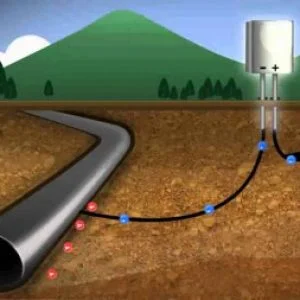
Cathodic protection is a method used to prevent corrosion in metal structures, such as pipelines, tanks, and offshore platforms. It involves the application of a direct current to the metal structure, which creates an electrochemical reaction that slows or stops the corrosion process.
Cathodic protection is an important aspect of ensuring the integrity and reliability of metal structures in various industries, including oil and gas, water and wastewater, and transportation. It involves the use of specialized equipment and techniques, including voltage and current measurements, to monitor and control the cathodic protection process.
Our member group offers a platform for sharing knowledge and best practices on cathodic protection and its applications in various industries. Join our community of experts from around the world and be a part of the conversation on advancing the practice of cathodic protection and its applications in the field of NDT and inspection. Whether you are new to cathodic protection or an experienced professional, you'll find valuable resources and a welcoming community in our group.
Updates
-
 tcgjr started the discussion Is "stray current testing" a misnomer? in the forum Cathodic Protection3 years ago
AFAIK, stray current testing consists of measuring the potential (voltage) between two locations (typically 30-meters or 100-feet apart*) using a high impedance voltmeter or datalogger.
A fixed criteria of typically 50-mV is used to determine if there are possible damaging currents in the electrolyte.
- 1. Since only potential is being measured, how is current being tested?
Of course, current can be measured by knowing the resistance between the two locations. Therefore, it would be necessary to determine the resistance between the two locations to actually measure the current.- 2. What is the basis for the 50-mV criterion?
* It would appear that the 30-meter spacing would be intended to reduce the resistance between the two locations to as close to zero ohms as possible. Thus, the 50-mV criterion would indicate that there is a substantial current present in the electrolyte. (0.050V/0.0000001Ω=500000A) Therefore, the test becomes sensitive. -
 NDT-Inspect started the discussion Why would Cathodic protection fail? in the forum Cathodic Protection3 years ago
There are several reasons why cathodic protection systems can fail. Some common causes of failure include:
Inadequate design: If the cathodic protection system is not properly designed for the specific application, it may not provide sufficient protection against corrosion.
Poor installation: If the cathodic protection system is not installed correctly, it may not function properly and may not provide sufficient protection against corrosion.
Lack of maintenance: Cathodic protection systems require regular maintenance to ensure they are functioning properly. If the system is not properly maintained, it may fail to protect the metal structure from corrosion.
Electrical issues: Cathodic protection systems rely on an electrical current to function. If there are problems with the electrical circuit or the power source, the system may not work properly.
Damage to the system: Cathodic protection systems can be damaged by physical impact, such as from vehicles or construction equipment. If the system is damaged, it may not provide sufficient protection against corrosion.
Changes in the environment: The effectiveness of cathodic protection systems can be affected by changes in the environment, such as changes in the soil or water chemistry. If the environment changes significantly, the cathodic protection system may not work properly.
By understanding these potential causes of failure, it is possible to design and maintain cathodic protection systems to ensure they are effective at protecting metal structures from corrosion.
-
NDT-Inspect started the discussion Examples of the use of cathodic protection in the forum Cathodic Protection3 years ago
There are many examples of the use of cathodic protection in various industries:
Oil and gas: Cathodic protection is commonly used to protect pipelines and storage tanks in the oil and gas industry.
Marine: Cathodic protection is used to protect ships, offshore platforms, and other marine structures from corrosion caused by saltwater.
Infrastructure: Cathodic protection is used to protect bridges, water treatment plants, and other infrastructure from corrosion.
Storage tanks: Cathodic protection is used to protect storage tanks, such as fuel tanks and water tanks, from corrosion.
Buried pipelines: Cathodic protection is often used to protect buried pipelines from corrosion caused by soil and other environmental factors.
Railways: Cathodic protection is used to protect railway tracks and other rail infrastructure from corrosion.
Rebar in concrete: Cathodic protection is used to protect the rebar in concrete structures, such as buildings and bridges, from corrosion.
Water storage tanks: Cathodic protection is used to protect water storage tanks and reservoirs from corrosion.
These are just a few examples of the many ways that cathodic protection is used to protect metal structures from corrosion.
-
3 years ago
Cathodic protection is a method used to protect metal structures, such as pipelines, tanks, and ships, from corrosion. It works by using an electrical current to reduce the corrosion of the metal.
There are two main types of cathodic protection: galvanic cathodic protection and impressed current cathodic protection.
In galvanic cathodic protection, a more corrosion-resistant metal, such as zinc or aluminum, is used to protect the metal structure. This metal is connected to the structure to be protected and acts as a "sacrificial anode," meaning it corrodes instead of the protected metal.
In impressed current cathodic protection, an electrical current is used to protect the metal structure. A direct current is applied to the structure through an electrical circuit, which creates an electrochemical reaction that reduces corrosion.
Cathodic protection is an effective way to protect metal structures from corrosion, and it is commonly used in a variety of industries, including oil and gas, marine, and infrastructure.
-
NDT-Inspect posted an update in the group Cathodic Protection3 years ago
Cathodic protection is a technique used to prevent the corrosion of metal structures, such as pipelines, ships, and offshore platforms.
It works by using an electric current to create a protective coating on the metal surface, which prevents the formation of rust and other corrosion products. In cathodic protection systems, a direct current is applied to the metal surface using a cathode, which is typically made of zinc or aluminum.
The current flows through the metal and creates an electrical potential, which inhibits the formation of corrosion.
Cathodic protection is a common method for protecting metal structures from corrosion, and it is used in a variety of industries, including oil and gas, marine, and construction.