

NDT Community News Feed
Latest NDT & inspection industry news, jobs and community updates
Live updates from the NDT Inspect community: new NDT job vacancies, product launches from the virtual exhibition, forum discussions and member activity across ultrasonic, radiographic, phased array and every other inspection method. Join free to post and follow.
Sign in to post updates and join the conversation.
-
 NDT-Inspection-vacancies Hiring posted a new job.3 years ago
 -
NDT-Inspection-vacancies Hiring posted a new job.3 years ago
-
NDT-Inspection-vacancies Hiring posted a new job.3 years ago
-
NDT-Inspection-vacancies Hiring posted a new job.3 years ago
-
 krishnamoorthy posted a new resume.3 years ago
 -
 bharathraj posted a new resume.3 years ago
 -
 Integrity-Solutions-doo Exhibitor posted a new service.3 years ago
 -
Integrity-Solutions-doo Exhibitor posted a new NDT Virtual Exhibition Stand.3 years ago
-
 suryadev posted a new resume.3 years ago
 -
 3 years ago
Hi,
I have found this:
you determine both your a/l and your a/t for a given thickness. This will likely require linear interpolation(s). You then compare your a/t% to your a/l for that thickness. If your a/t% falls below the allowable a/t% for that thickness, the flaw is allowable.
General formula for interpolation:
http://www.ajdesigner.com/phpinterpolation/linear_interpolation_equation.php
Hope it helps.
-
 3 years ago
I'm having a discussion about the acceptability of indications by applying table 7.9 of ASME VIII Div.2.
There are two different opinions. It is not clear whether, in the event that a subsurface defect has a height lower than the value in the table and a length greater than 6.4 mm, the imperfection is acceptable or not.
In my opinion, to be unacceptable, both the height (a/t) and the length must exceed the values in the table and if it exceeds only the length, the limit is 4t.
Thanks to anyone who can help me. -
 ndtblog posted a new post.3 years ago
Ultrasonic testing (UT) is a non-destructive testing method that uses high frequency sound waves to inspect materials for defects. The following are some of the key calculations used in ultrasonic testing: […]
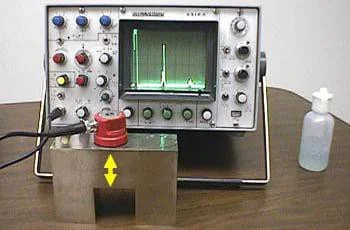 Ultrasonic Testing (UT) CalculationsUltrasonic testing (UT) is a non-destructive testing method that uses high frequency sound waves to inspect materials for defects. The following are some of…
-
 SivakumarVenkatesan posted a new resume.3 years ago
 -
 harikrishnan posted a new resume.3 years ago
 -
NDT-Inspection-vacancies Hiring posted a new job.3 years ago
-
NDT-Inspection-vacancies Hiring posted a new job.3 years ago
-
NDT-Inspection-vacancies Hiring posted a new job.3 years ago
-
NDT-Inspection-vacancies Hiring posted a new job.3 years ago
-
NDT-Inspection-vacancies Hiring posted a new job.3 years ago
-
NDT-Inspection-vacancies Hiring posted a new job.3 years ago
-
 imran-ahmad posted a new resume.3 years ago
 -
 chaitu2728 posted a new resume.3 years ago
 -
Kenton started the discussion The Importance of Impartial and Objective Evaluation in Non-Destructive Testing in the forum Codes and Standards3 years ago
Non-Destructive Testing (NDT) is a crucial aspect of the manufacturing process, as it helps to ensure that parts and structures meet required standards. In many industries, third-party NDT inspection is mandatory to guarantee impartial and objective evaluation of the parts and structures. However, some companies attempt to circumvent third-party inspection by setting up their own NDT laboratory and conducting the inspections in-house.
While this approach may seem more convenient and cost-effective, it raises serious concerns about the impartiality and objectivity of the inspection results. The integrity of the NDT process is dependent on the use of independent, third-party inspectors who are not affiliated with the company manufacturing the parts or structures. By doing so, companies can ensure that the parts and structures are evaluated objectively, without any conflicts of interest.
Companies should not take shortcuts when it comes to NDT inspection. While it may be tempting to conduct the inspection in-house, it is important to remember that impartial and objective evaluation is crucial for the success of the NDT process. Companies that invest in independent, third-party NDT inspection can be confident that their parts and structures meet required standards, ensuring the quality and safety of their products.
To prevent companies from evading third-party NDT inspection, the following steps can be taken:
Implement regulations and standards: Governments and industry organizations can establish regulations and standards that require third-party NDT inspection for all parts and structures. These regulations should be strictly enforced to ensure that companies comply with the requirements.
Promote the importance of impartial evaluation: Companies can be educated about the importance of impartial evaluation in the NDT process. This can help to raise awareness about the dangers of in-house NDT inspection and encourage companies to invest in independent, third-party inspection.
Enhance the accreditation process: The accreditation process for NDT inspection companies can be enhanced to ensure that only reputable and qualified organizations are authorized to conduct NDT inspections. This will help to reduce the number of companies that are not equipped to provide impartial and objective evaluation.
Encourage transparency: Companies that conduct NDT inspection should be encouraged to be transparent about their methods and results. This will help to promote confidence in the NDT process and increase the credibility of the results.
Foster collaboration: Governments, industry organizations, and NDT inspection companies can work together to promote the importance of impartial and objective evaluation in the NDT process. This can help to raise awareness about the dangers of in-house NDT inspection and encourage companies to invest in independent, third-party inspection.
Has any member come across instances where companies have attempted to evade third-party NDT inspection and conduct the inspections in-house? If so, how frequent is this issue in the industry?
-
ndtblog posted a new post.3 years ago
Stress corrosion cracking (SCC) is a type of corrosion that occurs when a material is subjected to both tensile stress and a corrosive environment. SCC is a significant concern for many materials and industries, […]
 Stress Corrosion Cracking (SCC)Stress corrosion cracking (SCC) is a type of corrosion that occurs when a material is subjected to both tensile stress and a corrosive environment. SCC is a…
-
3 years ago
Amine cracking can occur in carbon steel pipelines, which are commonly used in the oil and gas industry. The degradation of amine-based chemicals can lead to corrosion in the pipelines, causing the steel to degrade and potentially leading to leaks and other operational issues. This is why proper selection and use of amine-based chemicals, as well as regular monitoring and maintenance, is crucial in ensuring the safe and effective operation of carbon steel pipelines.
Amine cracking in HAZ on carbon steel
Amine cracking can occur in the heat-affected zone (HAZ) of carbon steel pipelines, especially in situations where the temperature exceeds the recommended limits for the particular amine-based chemical being used. The high temperatures can cause the amine-based chemical to degrade, leading to corrosion and potential cracking in the HAZ. This can compromise the integrity and safety of the pipeline, and result in operational issues.